You Won’t Believe What’s Hiding in Porto’s Streets — A Style Lover’s Dream
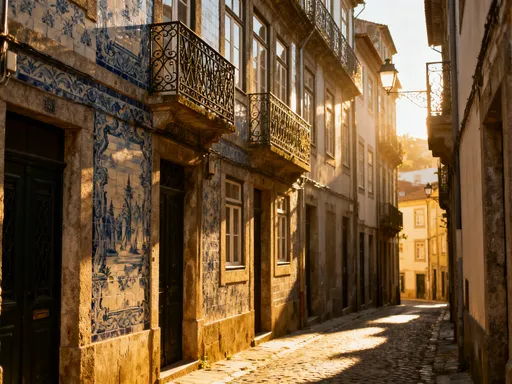
Porto isn’t just about wine and riverside charm — it’s a living museum of architectural magic most tourists completely miss. I wandered its hills with no map, only curiosity, and stumbled upon tile-clad secrets, iron balconies whispering history, and churches that look like they were painted by dreams. This city’s soul lives in its details. If you’ve ever fallen in love with a building just by its windows, Porto was made for you. Let’s uncover what most travelers walk right past.
The First Glimpse: Why Porto’s Architecture Feels Like a Secret
Arriving in Porto, the first thing that strikes visitors is how the city unfolds like a carefully folded letter—each crease revealing something unexpected. The narrow cobbled streets climb and dip with the terrain, leading to sudden viewpoints where terracotta rooftops spill down to the Douro River like cascading ribbons. Unlike cities built on grids, Porto grows organically, shaped by centuries of adaptation to its hilly landscape. This topography, combined with dense urban development, creates a sense of intimacy and discovery at every turn.
As a designated UNESCO World Heritage site since 1996, Porto’s historic center enjoys legal protection that preserves its architectural integrity. Yet this recognition, while essential, can also create a paradox: tourists often stick to a handful of well-marked routes, missing the deeper layers that lie just beyond the main squares. The Ribeira district, for instance, draws crowds with its colorful riverside facades, but a short climb up Rua de São Filipe Neri reveals a quieter, equally enchanting Porto—where laundry flutters between buildings and sunlight filters through wrought-iron grilles.
What sets Porto apart is how its architecture tells stories not through grand monuments alone, but through subtle, everyday details. A weathered doorframe, a mosaic step, or a fragment of tilework embedded in a modern wall—all speak of continuity. The city doesn’t hide its past; it weaves it into the present. For the observant traveler, this means that beauty isn’t confined to postcard spots. It’s in the way a centuries-old arch frames a glimpse of the river, or how a hidden courtyard blooms behind an unassuming doorway. Porto rewards slowness, inviting you to look closer, climb higher, and wander without agenda.
Azulejos Everywhere: The Soul of Portuguese Design
Among the most captivating elements of Porto’s visual identity is the azulejo—the hand-painted ceramic tile that adorns everything from churches to train stations, homes to public fountains. These blue-and-white (and sometimes polychrome) tiles are more than decorative; they are a living tradition that dates back to the 15th century, influenced by Moorish art and later refined by Portuguese artisans. In Porto, azulejos are not just preserved; they are actively used, maintained, and even newly created, making them a dynamic part of the city’s aesthetic language.
One of the most breathtaking displays can be found at São Bento Railway Station, where over 20,000 tiles form a panoramic narrative of Portugal’s history. Scenes of royal processions, rural life, and transportation evolution unfold across the main hall, all rendered in soft cobalt and white. But equally moving are the smaller, less-visited examples—like the Capela das Almas in the bustling Via Latina, where the entire façade is covered in azulejos depicting the lives of saints. These tiles do more than beautify; they educate, commemorate, and sanctify.
What makes azulejos so powerful is their storytelling capacity. Unlike static murals, they are durable, weather-resistant, and capable of covering vast surfaces with intricate detail. Over time, they’ve depicted religious devotion, maritime exploration, and domestic tranquility. In residential neighborhoods like Massarelos or Lordelo do Ouro, entire building fronts are clad in geometric or floral patterns, each design a reflection of the owner’s taste or historical period. Even modern buildings sometimes incorporate tilework as a nod to tradition, ensuring the craft remains relevant.
For visitors, appreciating azulejos means more than snapping photos. It means understanding their cultural weight—the way they protect walls from moisture, reduce heat, and elevate ordinary structures into works of art. Local workshops still produce new tiles using traditional techniques, and guided tours offer hands-on experiences for those who wish to try painting their own. More than a design trend, azulejos represent a national pride in craftsmanship, a belief that beauty belongs in daily life.
Baroque Drama and Quiet Corners: Churches That Break the Mold
Porto’s skyline is punctuated by church spires, but it’s inside these sacred spaces that the city’s artistic soul reaches its zenith. The Igreja dos Clérigos, with its soaring bell tower, dominates the cityscape, but it’s the interior of churches like São Francisco that truly astonish. Stepping into São Francisco is like entering a gilded dream—every surface, from floor to ceiling, is encrusted with intricately carved woodwork covered in gold leaf. This is Baroque at its most opulent, a deliberate expression of divine glory meant to inspire awe and reverence.
Yet what makes these spaces remarkable is not just their grandeur, but the intimacy of their craftsmanship. The carvings depict swirling vines, angels, and biblical scenes with astonishing detail, each piece hand-chiseled by 18th-century artisans. The effect is overwhelming, yet strangely comforting—a testament to the devotion poured into their creation. While São Francisco draws many visitors, nearby gems like the Igreja do Carmo and Igreja de Santo Ildefonso offer equally rich experiences with fewer crowds. The former features a striking azulejo-covered façade, while the latter houses one of the city’s oldest organs.
Outside the main tourist circuit, smaller chapels and monasteries reveal quieter forms of beauty. The Convento de Santa Clara, though partially ruined, retains fragments of its original splendor, including a serene cloister where silence seems built into the architecture. These spaces remind us that religious architecture in Porto isn’t just about spectacle; it’s about creating environments for reflection, community, and continuity. Even as attendance at services declines, these buildings remain cultural anchors, cared for by local parishes and preservation groups.
For the style-conscious traveler, these churches offer masterclasses in texture, proportion, and light. The way candlelight flickers on gold-leaf carvings, or how stained glass casts colored patterns on stone floors, reveals a deep understanding of atmosphere. Visiting them at different times of day—early morning, late afternoon—reveals shifting moods, as sunlight interacts with ornamentation. These are not frozen relics, but living spaces where history, art, and spirituality converge.
Iron, Glass, and Light: The French Influence on Porto’s Elegance
In the late 19th century, Porto underwent a transformation that gave the city much of its current elegance. Inspired by the urban renewal of Paris under Baron Haussmann, city planners widened streets, introduced gas lighting, and embraced new materials like cast iron and glass. This era, known as the Pombaline and later Eclectic period, brought a cosmopolitan flair to Porto, blending traditional Portuguese elements with European modernity. The result is a city that feels both historic and surprisingly contemporary in its urban design.
Nowhere is this more evident than in the grand cafés and arcaded buildings of the city center. Café Majestic, opened in 1921, is a prime example—a Belle Époque jewel with red velvet booths, gilded mirrors, and a ceiling painted with mythological figures. Though it draws tourists today, it was once a meeting place for intellectuals and artists, a symbol of Porto’s cultural sophistication. Similarly, the Passagem de São Pedro and the Galerias de Paris shopping arcade showcase glass-covered walkways supported by delicate iron frameworks, offering shelter from rain while flooding the space with natural light.
Cast iron balconies are another hallmark of this era, adorning buildings with lace-like precision. Unlike the solid stone balustrades of older structures, these lightweight yet durable elements allowed for more open, airy façades. They often feature floral motifs, scrollwork, and geometric patterns, reflecting both industrial capability and artistic sensibility. In neighborhoods like Boavista and Cedofeita, entire blocks display this style, where wrought-iron balconies overflow with geraniums, blurring the line between architecture and nature.
This fusion of function and beauty defines Porto’s 19th-century legacy. The use of glass and iron wasn’t merely aesthetic; it improved ventilation, allowed more light into narrow streets, and modernized living conditions. Today, these buildings house boutiques, bookstores, and family apartments, proving that historic design can adapt to modern needs. Walking through these districts feels like strolling through a living museum of urban innovation—one where style never sacrificed comfort, and elegance served everyday life.
Rooftop Wonders: The Hidden Geometry Above Street Level
Most travelers experience Porto at street level, but some of its most striking architectural features are visible only when you look up. The city’s skyline is a patchwork of sloped terracotta roofs, each shaped by practical needs and local tradition. These roofs, often hidden behind parapets, are designed to handle the region’s frequent rainfall, with gentle inclines that allow water to run off efficiently. Chimneys, too, are more than functional—they come in a variety of shapes and sizes, some tall and slender, others wide and ornate, each a subtle expression of individuality.
Skylights and dormer windows punctuate the roofline, bringing light into attic spaces that were once used for storage or servants’ quarters. Today, many of these areas have been converted into cozy living spaces, blending old and new with careful renovation. From certain vantage points—like the rooftop bar of the Torel 1884 hotel or the Miradouro da Vitória—the layered effect of rooftops creates a mesmerizing pattern, like waves frozen in clay. It’s a view that reveals the city’s density and verticality, a reminder that Porto builds upward as much as it spreads outward.
One of the best ways to appreciate this aerial beauty is from the Torre dos Clérigos, where a narrow spiral staircase leads to a panoramic balcony. From here, the city unfolds in all directions—the winding Douro River, the distant hills, and the endless sea of red tiles below. Photographers and artists often gather here at golden hour, when the low sun turns the rooftops into a glowing mosaic. But even from street level, a simple habit of looking up can yield rewards: a beautifully crafted weathervane, a hidden garden on a flat roof, or the intricate joinery of wooden beams exposed during repairs.
This emphasis on the vertical dimension reflects Porto’s relationship with space. With limited room to expand, the city has always built smartly, using height to maximize utility. Yet even in these functional elements, beauty was never an afterthought. The care taken in shaping chimneys, aligning roof tiles, or designing skylights shows a culture that values craftsmanship in every corner. For the attentive visitor, the sky is not just a backdrop—it’s part of the story.
Living Architecture: How Locals Interact With Historic Spaces
What truly sets Porto apart is how its people live within and care for its historic architecture. Unlike cities where old buildings are preserved as museums, Porto’s structures remain fully integrated into daily life. Families raise children in centuries-old townhouses, shopkeepers open their doors in buildings with Baroque pediments, and bakers pull warm bread from ovens in kitchens that have served generations. This continuity gives the city a lived-in authenticity that feels warm and welcoming, not staged or sterile.
Maintenance is a constant effort. Many buildings require regular repairs due to humidity, age, and the region’s mild seismic activity. Yet rather than replacing old materials, locals often restore them—repairing wooden shutters, repointing stone walls, or cleaning azulejos by hand. This respect for original craftsmanship is supported by government incentives and heritage guidelines, but it also stems from personal pride. For many residents, their home is not just a place to live, but a legacy to uphold.
This balance between preservation and modernization is evident in how interiors are adapted. It’s common to find a 17th-century façade housing a modern kitchen, or a Baroque staircase leading to a minimalist apartment. Designers and architects work carefully to respect the building’s character while improving insulation, plumbing, and accessibility. The result is a city that evolves without losing its soul—a place where history isn’t behind glass, but part of everyday comfort.
Small businesses thrive in this environment. A family-run bookstore might occupy a former chapel, its shelves built into old confessionals. A café could be nestled in a 19th-century arcade, its tables placed where merchants once traded. These spaces gain charm not just from their looks, but from their layers of use. For visitors, engaging with them—buying a pastry from a tiler’s granddaughter, chatting with a bookseller in a vaulted room—creates connections that go beyond sightseeing. Porto’s architecture isn’t frozen in time; it breathes, changes, and welcomes new stories.
Walking the Unseen Path: A Practical Guide to Experiencing Porto’s True Style
To truly appreciate Porto’s architectural richness, it helps to move beyond the main attractions and explore with intention. One recommended route begins at the Clérigos Tower and winds through the quieter streets of Massarelos, where grand 18th-century houses line the road to the Serralves Museum. This path offers a mix of azulejo-covered churches, iron-laden balconies, and glimpses of the river through architectural frames. Another rewarding walk starts in the São Bento area and follows Rua de Dom Hugo uphill, passing hidden courtyards and local bakeries tucked into historic buildings.
Timing matters. Early morning, between 8 and 10 a.m., is ideal for photography and quiet observation. The light is soft, the streets are less crowded, and residents are just beginning their day—hanging laundry, opening shutters, sweeping doorsteps. Late afternoon, especially in spring and autumn, brings golden light that enhances the warm tones of stone and tile. Weekdays are generally quieter than weekends, and visiting in the shoulder seasons—April to June or September to October—means fewer crowds and more pleasant temperatures.
Respectful exploration is key. While it’s tempting to peer into open doorways or photograph private homes, it’s important to remember that people live in these buildings. Stick to public spaces, ask permission before entering courtyards or churches, and avoid blocking sidewalks with tripods or large groups. Many locals appreciate genuine interest in their city’s heritage and may even share stories or tips if approached politely. Some neighborhoods offer guided walking tours led by architects or historians, providing deeper insight into design details and historical context.
For those who want to go deeper, consider attending a tile-painting workshop, booking a rooftop tour, or staying in a restored heritage home through reputable rental platforms. These experiences foster a more personal connection to the city’s architectural soul. The goal isn’t to check off landmarks, but to cultivate a slower, more observant way of traveling—one that values detail, light, and the quiet beauty of everyday spaces.
Conclusion
Porto’s architecture isn’t just beautiful — it’s alive, layered with stories, faith, and craftsmanship that span generations. What makes it truly special isn’t just what you see, but how it makes you feel: like every corner was designed to surprise. By slowing down and looking closer, travelers gain more than photos — they gain a deeper connection to a city that hides its wonders in plain sight. The real secret? Porto rewards those who look up.