Wild Heart of Alaska: Chasing the Pulse of America’s Last Frontier
You know that feeling when nature just hits you in the face with pure wildness? That’s Alaska’s protected lands. I’m talking vast tundras, grizzlies ambling past glaciers, and silence so deep it echoes. These aren’t just parks—they’re lifelines. As someone who’s hiked where moose outnumber people, I’ll show you how to truly experience Alaska’s soul, one protected wilderness at a time. This is real. This is raw. Alaska holds over 40% of the United States’ federally protected wildlands, an immense network of forests, tundras, and coastlines where nature writes its own rules. These lands are not only breathtaking—they are essential. They stabilize climate systems, shelter rare species, and sustain ancient ways of life. In a world growing ever noisier and more crowded, Alaska’s wild heart beats stronger than ever, offering a rare chance to reconnect with the planet in its most untamed form.
Why Alaska’s Protected Areas Matter
Alaska’s protected areas form the cornerstone of American conservation, safeguarding some of the most ecologically significant landscapes on the continent. Spanning over 100 million acres, these lands include national parks, wildlife refuges, and conservation areas managed by federal and state agencies such as the National Park Service, U.S. Fish and Wildlife Service, and the Bureau of Land Management. The scale is staggering—Denali, Gates of the Arctic, and Wrangell-St. Elias alone cover more area than many countries. These regions protect intact ecosystems that have remained largely undisturbed for millennia, serving as living laboratories for scientists studying climate resilience, species adaptation, and ecological balance.
The ecological importance of these areas cannot be overstated. Boreal forests stretch across the interior, acting as massive carbon sinks that help regulate global climate patterns. Wetlands along the Yukon-Kuskokwim Delta provide critical breeding grounds for millions of migratory birds, including tundra swans, spectacled eiders, and sandhill cranes. Coastal regions like the Alaska Peninsula support rich marine food webs, from kelp forests to seabird colonies. The state’s rivers and lakes sustain some of the last great salmon runs on Earth, fueling entire ecosystems from bears to eagles to orcas. These interconnected systems rely on vast, unbroken landscapes—something increasingly rare in the modern world.
Biodiversity thrives here in ways unseen elsewhere. Caribou herds numbering in the tens of thousands migrate across the Arctic tundra, following ancient routes shaped by wind, snow, and survival. Wolves patrol the taiga in family packs, maintaining natural checks on herbivore populations. Rare species like the Alaska marmot and the Arctic fox have adapted to extreme conditions, surviving where few other mammals can. Protected lands ensure these animals have space to roam, hunt, and reproduce without the pressures of industrial development or habitat fragmentation. Conservation is not just about saving individual species—it’s about preserving the intricate web of life that makes Alaska so extraordinary.
Moreover, these lands serve as vital climate buffers. Permafrost underlies much of northern Alaska, storing vast amounts of organic carbon. When undisturbed, it remains frozen, locking away greenhouse gases. But as temperatures rise, thawing permafrost releases carbon dioxide and methane, accelerating climate change. Protected areas limit human disturbance, helping maintain the stability of these frozen soils. Similarly, healthy wetlands and forests absorb carbon from the atmosphere, acting as natural climate solutions. In an era of global environmental uncertainty, Alaska’s wildlands offer a rare opportunity to protect large-scale ecosystems before they are lost.
Federal and state agencies work collaboratively to maintain ecological integrity across these remote regions. Monitoring programs track wildlife populations, vegetation changes, and water quality. Fire management strategies allow natural wildfires to play their role in forest renewal while protecting human communities. Visitor use is carefully regulated to prevent overuse and degradation. These efforts reflect a long-term commitment to stewardship, rooted in science and respect for the land. For families, educators, and nature lovers, Alaska’s protected areas are not just scenic destinations—they are essential guardians of planetary health.
Denali National Park: Where Giants Walk
Rising like a sentinel over six million acres of pristine wilderness, Denali National Park stands as one of America’s most iconic protected landscapes. At its center looms Denali itself—formerly known as Mount McKinley—the tallest peak in North America at 20,310 feet. Its snow-capped summit pierces the sky, often shrouded in clouds, visible only on the clearest days. The name "Denali" means "the tall one" in the Koyukon Athabascan language, a fitting tribute to a mountain that commands reverence. But the park is far more than just a single peak; it is a vast, interconnected ecosystem where glaciers carve valleys, rivers snake through tundra, and wildlife roams freely across an unbroken horizon.
One of Denali’s greatest strengths is its commitment to minimal human impact. Unlike many national parks, it has only one main road—92 miles long and unpaved—limiting vehicle access and preserving the sense of remoteness. Visitors travel deep into the park via a shuttle bus system operated by the National Park Service and authorized concessioners. These buses follow a strict schedule, allowing passengers to disembark at designated stops to hike, photograph wildlife, or simply absorb the silence. There are no entrance fees at remote trailheads, no developed campgrounds with hookups, and no commercial developments within the backcountry. This deliberate restraint ensures that the experience remains authentic, immersive, and true to the spirit of wild Alaska.
Wildlife viewing in Denali is unparalleled. It’s common to see grizzly bears digging for roots along riverbanks, Dall sheep perched on rocky cliffs, and moose wading through willow thickets. Wolves, though elusive, leave tracks in the snow and howl in the distance. Caribou herds move unpredictably across the landscape, following food and weather patterns. The park supports healthy populations of smaller mammals too—foxes, lynx, marmots, and even the rare wolverine. Birdwatchers delight in golden eagles soaring above ridgelines and ptarmigan camouflaged in tundra moss. Each sighting feels earned, not guaranteed, reinforcing the idea that this is not a zoo but a living, breathing wilderness.
For those seeking deeper engagement, ranger-led programs offer valuable insights into the park’s ecology and cultural history. From guided walks to evening talks at campgrounds, these educational opportunities connect visitors with the land in meaningful ways. Backcountry permits allow experienced hikers to explore off-trail, following Leave No Trace principles to minimize impact. Climbers attempt Denali’s summit through guided expeditions, requiring technical skill, physical endurance, and respect for the mountain’s dangers. Every visitor, whether driving the road or trekking into the high alpine, is asked to honor the park’s ethos: take only pictures, leave only footprints.
Denali’s management philosophy centers on preservation over convenience. There are no cell phone signals, no Wi-Fi, and limited dining options—features that many find liberating rather than limiting. The absence of modern distractions allows for a rare kind of presence, where the rustle of wind in the grass or the distant crack of ice becomes the soundtrack of the day. This intentional simplicity is what makes Denali not just a destination, but a transformation. It reminds us that wild places still exist, vast and powerful, waiting to be experienced on their own terms.
Katmai and the Kingdom of the Bears
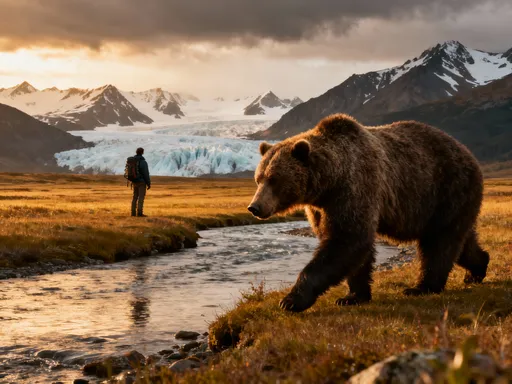
If Denali represents the grandeur of Alaska’s interior, Katmai National Park embodies the raw power of its coastal ecosystems. Located on the Alaska Peninsula, accessible only by plane or boat, Katmai is best known for its dense population of brown bears—some of the largest in the world. The park’s most famous site, Brooks Falls, draws visitors from across the globe who gather on wooden platforms to witness a spectacle as old as time: bears standing shoulder-deep in rushing water, catching salmon mid-leap with powerful swipes of their paws. The scene is both dramatic and routine, a perfect illustration of nature’s balance between predator and prey.
Katmai spans nearly 4 million acres, encompassing volcanic landscapes, pristine lakes, and dense forests. The 1912 eruption of Novarupta, one of the largest volcanic events of the 20th century, created the Valley of Ten Thousand Smokes, a surreal landscape of ash flows and fumaroles now cooled and silent. Today, the park’s rivers run rich with sockeye salmon, attracting bears in numbers unmatched anywhere else. During peak season—from July through early September—dozens of bears may congregate along Brooks River, each establishing a hierarchy based on size, age, and temperament. Dominant males claim the best fishing spots, while younger bears and sows with cubs wait their turn downstream.
Visitation to Katmai is highly regulated to protect both bears and people. Most travelers arrive via small aircraft from Anchorage or King Salmon, landing at Brooks Camp, the park’s primary visitor hub. Accommodations are limited to a lodge and a campground, both operating under strict wildlife safety protocols. Food is stored in bear-proof containers, and visitors must maintain a safe distance at all times. Ranger-led programs educate guests about bear behavior, proper etiquette, and the importance of non-interference. These guidelines ensure that viewing remains sustainable, allowing future generations to witness the same natural drama.
The experience of watching bears in Katmai is humbling. There’s no music, no commentary, no artificial staging—just the raw reality of survival. A mother bear teaches her cubs to fish, nudging them toward the current. A young male tests his strength against an older rival, posturing and growling before retreating. The salmon, driven by instinct, leap upstream despite the waiting predators. Every moment feels sacred, a reminder that humans are guests in this ancient cycle. For many visitors, especially mothers and families, the sight of a sow protecting her cubs resonates deeply, evoking parallels to human nurturing and resilience.
Beyond Brooks Falls, Katmai offers solitude and adventure. Kayakers paddle along the Naknek Lake shoreline, camping on remote beaches. Hikers explore trails through alder thickets and open meadows, scanning for bears, foxes, and migratory birds. Some venture to lesser-known rivers like Geographic Harbor or Kukak Bay, where the chances of seeing bears are high but the crowds are absent. These experiences reinforce the park’s dual role: protecting wildlife while offering transformative encounters for those willing to travel far and tread lightly.
Glacier Bay: Ice, Water, and Life in Motion
Carved by glaciers and filled with saltwater, Glacier Bay National Park is a living portrait of change. Designated a UNESCO World Heritage Site and Biosphere Reserve, this southeastern Alaska treasure spans over 3.3 million acres of mountains, fjords, and rainforest. What makes Glacier Bay extraordinary is its dynamic nature—just 250 years ago, the entire bay was covered by a single massive glacier. Today, that ice has retreated over 65 miles, revealing new land, forests, and habitats in a process known as glacial rebound. Scientists study this area to understand how ecosystems recover after ice retreat, making it one of the most important natural laboratories in the world.
The park’s centerpiece is its tidewater glaciers—rivers of ice that flow into the sea and occasionally calve, sending house-sized chunks crashing into the water with thunderous roars. Margerie Glacier, one of the most active, draws cruise ships and kayakers alike, who wait in quiet anticipation for the next dramatic split. The sound echoes through the fjord, followed by the slow melt of icebergs bobbing in turquoise water. Humpback whales frequent these nutrient-rich waters, lunging through schools of herring with mouths agape. Sea otters float on their backs, cracking shellfish open on their chests. Steller sea lions bark from rocky haul-outs, while black bears forage along the shorelines.
Access to Glacier Bay varies widely. Large cruise ships enter from the south, offering guided tours with naturalists explaining the geology, ecology, and cultural history of the region. Smaller expedition vessels provide more intimate experiences, anchoring in quiet coves and launching Zodiacs for close-up views. Independent travelers can reach the park via the Alaska Marine Highway ferry system, docking at Gustavus, the gateway community. From there, air taxis and water taxis connect to remote lodges and trailheads. Kayaking is a favored way to explore, allowing visitors to paddle among icebergs, camp on secluded beaches, and listen to the silence broken only by wind and water.
The park’s ecological recovery is remarkable. As glaciers retreat, pioneer species like mosses and lichens colonize bare rock, followed by shrubs and eventually spruce and hemlock forests. Researchers monitor plant succession, soil development, and animal recolonization, tracking how life returns to newly exposed land. This process, though slow, demonstrates nature’s resilience. For visitors, witnessing this rebirth fosters a deep appreciation for the planet’s ability to heal when given space and time. It also serves as a sobering reminder of how quickly climate change is altering these landscapes—glaciers continue to retreat at an accelerating pace, reshaping coastlines and ecosystems.
Glacier Bay is also culturally significant. The Huna Tlingit people have lived in this region for thousands of years, relying on its resources for food, shelter, and spiritual connection. Their ancestral lands were displaced by glacial advance, only to be reclaimed as the ice receded. Today, the Huna Tlingit maintain a strong presence in the park, sharing stories, art, and traditions through cultural demonstrations and co-management initiatives. Their knowledge enriches the visitor experience, offering a deeper understanding of the land as both a physical and spiritual entity.
Arctic Refuge: The Edge of the World
Few places on Earth feel as remote or as vital as the Arctic National Wildlife Refuge. Stretching across 19 million acres in northeastern Alaska, this vast wilderness borders the Beaufort Sea and reaches into the Brooks Range. It is home to the Porcupine caribou herd, whose annual migration—one of the longest of any land mammal—takes them from the boreal forests of Canada to the coastal plain of the refuge, where females give birth in a narrow window of safety and abundance. This calving ground, known as the 1002 Area, has been at the center of a decades-long debate over oil development and conservation.
The refuge’s treeless tundra unfolds in rolling hills and braided rivers, a landscape shaped by wind, ice, and extreme cold. Polar bears den along the coast, emerging in spring with cubs in tow. Muskoxen, survivors of the Ice Age, roam in small herds, their shaggy coats protecting them from subzero temperatures. Migratory birds arrive each summer from as far as South America, filling the air with song. The refuge supports over 200 species, many of which depend on this fragile ecosystem for survival. Unlike national parks, the Arctic Refuge allows subsistence hunting and fishing by Indigenous communities, recognizing their deep cultural ties to the land.
Travel to the refuge is extremely limited. There are no roads, no visitor centers, and no marked trails. Most access is by small plane, landing on gravel bars or tundra strips. Expeditions require careful planning, experienced guides, and a high tolerance for unpredictability. Weather can shift rapidly, flights can be delayed for days, and wildlife encounters are never guaranteed. Yet for those who make the journey, the rewards are profound—a sense of solitude, connection, and awe that few places can offer.
Even for those who never visit, supporting the Arctic Refuge is possible. Advocacy, responsible tourism choices, and education help protect this irreplaceable landscape. Many conservation organizations work to preserve the refuge’s integrity, promoting policies that prioritize ecological health over short-term resource extraction. By raising awareness and respecting the land from afar, individuals contribute to its long-term survival. The refuge is not just a place—it is a promise, a commitment to leave some parts of the world wild and free.
Practical Tips for Visiting Alaska’s Wild Havens
Planning a trip to Alaska’s protected areas requires preparation, patience, and respect. The best time to visit is from late May to early September, when daylight is abundant, wildlife is active, and transportation options are most reliable. Summer temperatures can range from 50°F to 70°F in the south, but drop significantly in the interior and north, where frost is possible even in July. Layered clothing, waterproof gear, and sturdy boots are essential. Insect repellent is highly recommended, especially in June and July when mosquitoes can be intense in lowland areas.
Transportation varies by region. Anchorage and Fairbanks serve as major hubs, with flights connecting to remote communities and park gateways. The Alaska Marine Highway provides ferry service along the coast, offering scenic travel between towns like Juneau, Skagway, and Homer. Within parks, shuttle buses, air taxis, and water taxis are common. Booking in advance is crucial—lodging, tours, and permits fill up months ahead, especially for popular destinations like Denali and Katmai. Independent travelers should research backcountry regulations and carry emergency communication devices like satellite messengers.
Leave No Trace principles are non-negotiable in Alaska’s wildlands. This includes packing out all trash, avoiding wildlife disturbance, and camping only in designated areas. Food must be stored securely to prevent bear encounters. Rangers emphasize the 100-meter rule: staying at least that distance from bears and other large animals. Cooking and eating should never occur in sleeping areas. These practices protect both visitors and wildlife, ensuring that natural behaviors are not altered by human presence.
Choosing eco-conscious tour operators makes a difference. Look for companies certified by the Alaska Travel Industry Association or those with Leave No Trace training. Local guides often provide richer, more authentic experiences, sharing personal stories and cultural knowledge. Supporting Indigenous-owned businesses contributes to community resilience and sustainable tourism. Whether booking a flightseeing tour, a river rafting trip, or a wilderness lodge stay, responsible choices help preserve Alaska’s wild character for future generations.
The Future of Alaska’s Wild Legacy
The future of Alaska’s protected lands hinges on a delicate balance—between access and preservation, between human needs and ecological limits. Climate change poses the greatest threat, with rising temperatures accelerating glacial melt, thawing permafrost, and altering wildlife migration patterns. Species like the Arctic fox and snowy owl face shrinking habitats, while invasive plants and insects move northward. Coastal erosion threatens communities and critical wildlife zones. Yet these protected areas also serve as sanctuaries, offering refuge where ecosystems can adapt with minimal additional stress.
Responsible tourism plays a vital role in conservation. When travelers choose low-impact experiences, follow guidelines, and support local stewardship, they become allies in protection. Revenue from park fees, guided tours, and local businesses funds conservation efforts and community development. Education fosters empathy—when people see a bear fishing, a glacier calving, or a caribou herd moving across the tundra, they are more likely to care about preserving these wonders. For families, these experiences create lasting bonds and instill values of respect and responsibility in children.
Ultimately, Alaska’s wildlands are not just about scenery or adventure—they are about identity. They remind us of our place in the natural world, not as dominators, but as participants. They offer space for reflection, renewal, and awe. In a time of rapid change, these unbroken landscapes stand as testaments to resilience, beauty, and the enduring power of the wild. Protecting them is not just an environmental duty—it is a gift to the human spirit. The pulse of Alaska’s last frontier still beats strong. Let us ensure it continues to beat, for generations to come.