Golden Light & Sacred Earth: Chasing Amritsar’s Hidden Textures Through the Lens
You know that magic moment when light hits a surface just right and everything changes? That’s Amritsar. Beyond the Golden Temple’s glow, the city reveals surreal textures—cracked mud flats, gilded domes, sunbaked alleys—each a silent storyteller. I never expected such raw beauty in northern India. This is more than a pilgrimage site; it’s a photographer’s dream woven from earth, faith, and golden hour. The air hums with hymns, the scent of sandalwood lingers in narrow lanes, and the ground beneath your feet tells stories older than memory. In Amritsar, every surface holds a prayer, every shadow a history. For those who look closely, the city offers not just sights, but sensations—textures that linger in the mind long after the lens is put away.
The Soul of Amritsar: Where Spirituality Meets Visual Poetry
Amritsar is best known as the spiritual heart of Sikhism, home to the Harmandir Sahib—commonly called the Golden Temple—a vision of divine symmetry rising from the sacred Amrit Sarovar. Its golden dome, shimmering above still waters, draws millions of visitors each year, pilgrims and travelers alike. But beyond the reflection lies a deeper visual truth. The city is not only a center of worship but also a living canvas, shaped by centuries of devotion, seasonal rhythms, and the quiet passage of countless footsteps. It is a place where spirituality and visual poetry converge, where every surface—whether polished marble or weathered brick—bears the imprint of time and touch.
The textures of Amritsar are not accidental; they are accumulated. The smooth indentations on stone steps leading to the temple were carved not by tools, but by generations of bare feet, each pair adding a subtle mark to a collective journey. The iron-studded wooden doors of old havelis, once homes to merchants and scholars, show layers of paint peeled back by sun and rain, revealing histories in color and grain. Even the air seems textured—thick with the scent of incense, the rustle of prayer flags, and the soft murmur of kirtan drifting from gurdwaras at dawn. For the observant traveler, Amritsar is less a destination than a sensory archive.
Photographers are especially attuned to this interplay of the sacred and the tactile. The city’s architecture—layered, ornate, yet grounded—offers endless opportunities for composition. The contrast between the temple’s radiant gold and the earth-toned surroundings is more than aesthetic; it reflects a philosophical balance between the divine and the mortal. The worn textures surrounding the gilded center remind us that holiness is not separate from daily life but embedded within it. In this way, Amritsar becomes a metaphor: beauty born not from perfection, but from use, care, and continuity.
Light as a Character: Why Golden Hour Transforms Amritsar’s Surface
In photography, light is never neutral—it shapes perception, mood, and meaning. In Amritsar, light takes on an almost narrative role, especially during the golden hours just after sunrise and before sunset. At these times, the sun sits low on the horizon, casting long, dramatic shadows that stretch across courtyards, alleyways, and water surfaces. This angled light does more than illuminate; it reveals. It accentuates the ridges in ancient stone, the grain in wooden carvings, and the delicate cracks in sunbaked earth, transforming flat surfaces into three-dimensional tapestries.
Early morning light in Amritsar carries a particular clarity. As the first rays touch the golden dome of the Harmandir Sahib, they ignite it in a warm glow that seems to pulse from within. The reflection on the Amrit Sarovar becomes a liquid mirror, doubling the temple’s brilliance. But beyond the spectacle, this light softens edges and reduces contrast, allowing for balanced exposures. The air, often still at this hour, holds a fine mist that diffuses the sun’s rays, creating a gentle haze that adds depth and atmosphere to images. Photographers who arrive before dawn are rewarded not just with fewer crowds, but with a city that feels suspended between wakefulness and prayer.
Late afternoon offers a different quality—richer, warmer, more saturated. The sandstone buildings lining the bazaars absorb the sun’s warmth and radiate it back in golden tones. Dust motes suspended in the air catch the light like tiny sparks, creating a luminous veil over street scenes. This is the ideal time to explore the walled city, where narrow alleys act as natural light tunnels, guiding the eye toward unexpected details: a hand-carved window frame, a basket of marigolds on a doorstep, a patch of peeling mural. Side lighting during these hours is especially effective for emphasizing texture, casting shadows that outline the contours of walls, stairs, and cobblestones.
To make the most of this light, timing is essential. Midday sun, by contrast, is harsh and overhead, flattening surfaces and creating high-contrast scenes that are difficult to capture without loss of detail. Shadows become sharp and unyielding, and colors may appear bleached. For photographers, the solution is not to avoid the city at noon, but to shift focus—to indoor spaces, shaded courtyards, or reflective surfaces like polished marble or still water. Yet the true magic of Amritsar’s visual language unfolds only when the sun is low, when light ceases to be mere illumination and becomes a storyteller.
The Sacred Pool and Its Evolving Edge: Capturing the Fractured Beauty of the Amrit Sarovar’s Perimeter
The Amrit Sarovar, the sacred tank that cradles the Golden Temple, is central to Amritsar’s spiritual and visual identity. Fed by natural springs and maintained through careful stewardship, the pool is more than water—it is a living boundary between the earthly and the divine. Yet, like all natural systems, it is subject to seasonal change. During the drier months, particularly in late spring and early summer, parts of the outer rim recede, revealing expanses of mineral-rich mud that crack and curl as they dry. These exposed edges form intricate, web-like patterns that resemble ancient manuscripts or geological maps, offering photographers a rare opportunity to capture abstract, almost otherworldly compositions.
These textures are transient, emerging and vanishing with the water level. Their impermanence adds to their poetic resonance—each crack a record of time, each fissure a reminder of nature’s rhythms. When photographed up close, the dried mud appears as a network of fine lines, some delicate as lace, others deep and jagged. The play of light across these surfaces enhances their dimensionality, with shadows pooling in crevices and highlights skimming over ridges. A macro lens can reveal details invisible to the naked eye: salt crystals forming along edges, tiny footprints of birds or insects, the subtle variation in color from ochre to slate gray.
Photographing these zones requires both technical skill and ethical awareness. The Amrit Sarovar is a sacred space, and its perimeter, even when dry, is treated with reverence. Visitors are expected to remain on designated paths and avoid stepping onto exposed mud beds, both out of respect and to prevent damage. The best approach is to use a telephoto or zoom lens to capture close-up details from a distance. Wide-angle shots can frame the cracked earth against the backdrop of the temple’s reflection, creating a visual dialogue between permanence and change, solidity and fluidity.
Compositionally, these textures lend themselves to minimalism. A single patch of cracked mud, isolated against a soft background, can become a meditation on decay and renewal. When including human elements—such as a pilgrim walking along the parikrama (circumambulatory path)—the scale emphasizes both the fragility of the land and the continuity of devotion. These images do not seek to dramatize, but to observe: to show how even in retreat, the water leaves behind a story written in earth and light.
Beyond the Temple: Uncovering Hidden Textures in the Walled City
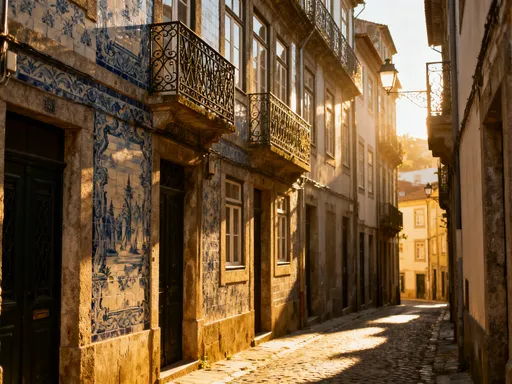
While the Golden Temple draws global attention, the true texture of Amritsar unfolds in the labyrinth of lanes that surround it—the old walled city, a network of alleys that have changed little in appearance over the past century. Here, away from the main thoroughfares, the city reveals its unscripted soul. Brick walls, some over a hundred years old, stand weathered but intact, their surfaces layered with decades of plaster, paint, and soot. Wooden doors, reinforced with iron bands and studs, bear the marks of time—dings, dents, and fading lacquer that speak of daily use and quiet resilience.
These streets are alive with sensory contrasts. Smooth marble thresholds lead into homes where the floors are swept clean each morning; rough-hewn stone walls support balconies draped with bright cloth and drying laundry. The colors are both vibrant and muted—faded saffron banners, peeling blue shutters, baskets of turmeric and chili stacked outside spice shops. Prayer flags, worn thin by sun and wind, flutter above alley crossings, their tattered edges catching the breeze like whispers. At dawn and dusk, when the light slants just right, these textures come alive, revealing a city that is not curated for visitors, but lived in, loved, and maintained.
For photographers, this area offers endless opportunities for candid, authentic imagery. The key is to move slowly, to observe without intrusion. Early mornings are ideal—before the markets fully open, when the streets are still quiet and shopkeepers are just beginning their day. This is when you might capture a man polishing a brass lamp, a woman arranging flowers at a doorstep shrine, or a cat curled in the shade of a stone pillar. These moments are fleeting, but they carry the weight of daily ritual.
Safety and accessibility are important considerations. While the walled city is generally welcoming, it is best to travel in small groups and avoid isolated alleys, especially after dark. Stick to well-traveled routes, such as those connecting major gurdwaras or leading to historic markets like Katra Jaimal Singh. Wearing modest clothing and removing shoes when entering homes or religious spaces shows respect and helps build trust with locals. Many residents are happy to be photographed, especially when approached with a smile and a brief explanation of your interest in the city’s heritage. Always ask permission before taking portraits, and be prepared to share a copy of the photo if requested.
The Craft of Seeing: How to Frame Amritsar’s Geological and Cultural Layers
Photographing Amritsar is not just about having the right equipment; it is about cultivating the right perspective. The city’s richness lies in its layers—geological, architectural, cultural—and capturing them requires intention, patience, and a willingness to look beyond the obvious. Composition becomes a form of translation, turning complex textures into coherent visual narratives. Whether shooting the grandeur of the Golden Temple or the quiet detail of a cracked wall, certain techniques can help convey the depth and meaning of what you see.
One of the most effective compositional tools is layering. In wide shots of the Amrit Sarovar, for example, including foreground elements—such as a row of prayer flags, a cluster of lotus leaves, or a pilgrim’s silhouette—adds depth and context. This technique draws the viewer’s eye into the image, creating a sense of immersion. Similarly, in street photography, using archways, windows, or door frames as natural frames can isolate a subject while anchoring it within its environment. These frames act as visual parentheses, highlighting what matters without removing it from its surroundings.
Leading lines are another powerful device. The parikrama around the Golden Temple forms a perfect circular guide, drawing the eye toward the central shrine. Cobblestone paths, rooflines, and rows of columns can all serve as lines that direct attention. When shooting from a low angle—kneeling or even lying down—these lines become more pronounced, emphasizing patterns in the ground or the rhythm of architectural elements. This perspective also brings the viewer closer to the texture of the earth, making the surface itself a subject.
Lens choice plays a crucial role. A 35mm lens is ideal for capturing scenes with context, allowing you to include both subject and setting in a balanced way. For intimate details—the grain of wood, the texture of stone, the weave of a prayer shawl—an 85mm or macro lens provides the necessary magnification. Aperture settings should be adjusted based on the desired depth of field: a narrow aperture (f/8 to f/16) keeps both foreground and background in focus, useful for architectural shots, while a wider aperture (f/2.8 to f/5.6) can isolate a subject, softening the background to reduce distraction. Shooting in RAW format ensures maximum flexibility in post-processing, allowing for precise adjustments to exposure, contrast, and color temperature without degrading image quality.
Respecting the Sacred: Ethical Photography in a Devotional Space
Amritsar is not a stage set. It is a living, breathing center of faith, where daily rituals, community service, and spiritual practice shape the rhythm of life. For photographers, this means that every shot carries ethical weight. The act of capturing an image is not neutral—it can honor or intrude, illuminate or exploit. The guiding principle must be respect: for the space, for the people, and for the traditions that sustain them.
There are clear guidelines for photography within the Golden Temple complex. Cameras are permitted in most outdoor areas, but flash photography is discouraged, especially during prayer times. Inside the sanctum, photography is strictly prohibited—a rule that must be honored without exception. Even near the edges of the sarovar, it is important to be mindful of worshippers engaged in meditation or prayer. The best practice is to observe first, shoot second. If someone appears uncomfortable, lower your camera. If a guard or volunteer indicates a restriction, comply immediately and with gratitude.
Photographing people requires particular sensitivity. Many pilgrims welcome respectful portraits, especially when approached with kindness and permission. A simple gesture—showing the camera, smiling, asking in basic Punjabi or English—can open a conversation. Some may decline, and that choice must be respected. When photographing children, always seek consent from a parent or guardian. Avoid candid shots of people in vulnerable moments—weeping, praying, or in physical discomfort. These are private experiences, not public content.
Dress modestly, remove shoes when required, and speak quietly. These small acts of courtesy go a long way in building trust. Remember, you are a guest in a sacred space. The images you create should reflect not just what you saw, but how you saw it—with humility, awareness, and care. Ethical photography does not limit creativity; it deepens it, ensuring that your work carries integrity as well as beauty.
From Frame to Memory: Why These Images Stay With You
The most enduring photographs from Amritsar are not those with perfect exposure or flawless composition. They are the ones that carry feeling—the quiet dignity of an elder’s hands folded in prayer, the way golden light settles on a cracked wall like a blessing, the silence between shutter clicks in a crowded courtyard. These images stay with you because they are not just records of place, but echoes of presence. They capture not only what Amritsar looks like, but what it feels like to be there.
In the end, photography in Amritsar becomes a form of connection. The textures you document—whether sacred, natural, or human-made—are not separate from life; they are part of it. The cracked earth mirrors human resilience. The gilded dome reflects collective hope. The worn steps testify to perseverance. To photograph these elements thoughtfully is to participate in their story, not as a spectator, but as a witness.
For the traveler, especially one seeking meaning beyond the surface, Amritsar offers a rare invitation: to look deeper, to move slower, to see with more than the eye. The city does not reveal itself all at once. Its textures unfold over time, in light and shadow, in silence and sound. And when you return home, your images—carefully made, respectfully taken—become more than souvenirs. They become quiet reminders of a place where beauty, impermanence, and reverence walk hand in hand. They invite not just remembrance, but reflection. And in that reflection, the journey continues.