You Won’t Believe What I Ate in Phnom Penh
Phnom Penh isn’t just Cambodia’s heartbeat—it’s a flavor explosion waiting to happen. I went looking for history, but stayed for the food. From smoky street grills to fragrant market stalls, every bite told a story. This city doesn’t just feed you; it welcomes you. If you think you know Southeast Asian cuisine, Phnom Penh will surprise you. Let me take you where the locals eat—no tourist traps, just real, bold, unforgettable tastes.
Arrival in Phnom Penh: First Bites and First Impressions
The moment I stepped out of the taxi at Phnom Penh International Airport, the city wrapped around me like a warm, slightly sticky embrace. The air was thick with humidity and the distant hum of thousands of motorbikes weaving through traffic. Above it all, the scent of lemongrass, garlic, and charcoal smoke drifted on the breeze, promising something deeply savory just around the corner. I hadn’t even checked into my guesthouse when my stomach began to rumble—not from hunger alone, but from anticipation. This was a city where food wasn’t an afterthought; it was the main event.
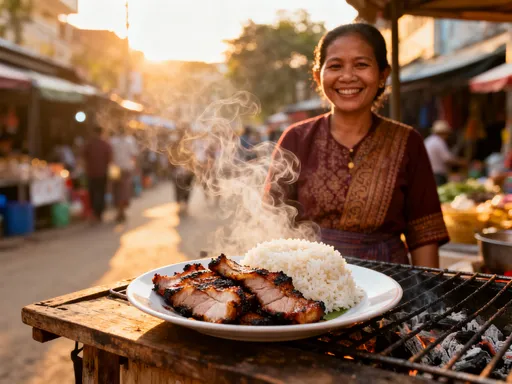
My first real taste of Phnom Penh came from a small wooden cart tucked beside a weathered concrete building near the river. A woman in a faded pink shirt stood behind a steaming grill, flipping thin slices of marinated pork with practiced ease. This was bai sach chrouk, the national breakfast dish: tender grilled pork served over fragrant jasmine rice, drizzled with a sweet soy-based sauce and paired with a slice of cucumber and a wedge of lime. I paid less than two dollars and sat on a plastic stool barely taller than my knees. The first bite was simple, honest, and utterly satisfying—crisp edges on the pork giving way to juicy tenderness, the rice subtly perfumed from being kept warm over steam.
What struck me most wasn’t just the flavor, but the warmth of the exchange. The vendor smiled as she handed me a small bowl of clear broth on the side, gesturing for me to sip it between bites. No words were needed. That small act—a gesture of care from a stranger—broke through the usual barriers of travel. In that moment, I wasn’t a tourist fumbling with unfamiliar currency; I was a guest at a table that had no walls. It was a reminder that in Phnom Penh, food is more than sustenance. It’s a language of welcome, a bridge between lives.
And yes, the conditions weren’t what I’d find back home. The street was dusty, the power lines tangled overhead, and the occasional fly hovered near the plate. But none of that mattered. This wasn’t about comfort or perfection. It was about authenticity—about experiencing life as it’s lived, not as it’s packaged. The meal wasn’t polished, but it was real. And that made all the difference.
The Heartbeat of the City: Central Market and Russian Market
If Phnom Penh has a culinary soul, it resides in its markets. Two stand out not just for their offerings, but for their rhythm—the pulse of daily life unfolding in aisles of color, scent, and sound. The first is Phsar Thmei, better known as Central Market, housed beneath a striking art deco dome that rises like a pearl above the city’s skyline. Built in the 1930s, this landmark is more than a shopping destination; it’s a living archive of Cambodian commerce. Inside, the air hums with energy. Vendors call out prices, children dart between stalls, and the scent of roasting coffee mingles with ripe mango and dried fish.
The food section is a revelation. Rows of vendors display pyramids of dragon fruit, rambutan, and golden pineapples, while others blend fresh fruit shakes on demand—mango with coconut milk, sugarcane juice with a hint of ginger, or soursop smoothies so creamy they feel like dessert. But the real treasures are the prepared dishes. At one corner stall, I watched an elderly woman assemble num banh chok, a traditional Khmer breakfast of soft rice noodles topped with a fragrant green fish curry made from lemongrass, kaffir lime, and turmeric. She ladled the sauce with care, then added a rainbow of fresh herbs—mint, basil, bean sprouts, and banana blossom—before handing it over with a quiet nod.
The flavors were bright and layered—earthy, citrusy, and just spicy enough to wake the senses. What made it special wasn’t just the taste, but the ritual. Locals arrived with small plastic bags, filling them not for a meal now, but for later—to share with family, to take to work, to save for a quiet moment. Food here isn’t rushed; it’s respected.
Just a few kilometers away, Phsar Toul Tom Poung, or Russian Market, offers a different but equally compelling experience. Originally a hub for Soviet-era traders, it has evolved into a bustling blend of shopping and street food. While more tourist-friendly than Central Market, it hasn’t lost its authenticity. Stalls sell everything from silk scarves to secondhand books, but the real draw is the food alley that runs along its eastern edge. Here, you’ll find prahok—fermented fish paste—sold in small jars, a staple in Khmer cooking that adds depth to countless dishes. It’s pungent, yes, but essential, like fish sauce in Thai or Vietnamese cuisine.
For visitors, the best time to explore either market is early morning, between 7 and 9 a.m., when the heat hasn’t yet peaked and vendors are restocking with the day’s freshest ingredients. Bring small bills, wear comfortable shoes, and don’t be afraid to point and smile. Most importantly, come hungry. Both markets reward curiosity. Whether it’s a tiny cup of teuk sralay—a herbal drink made from pandan and tamarind—or a plate of grilled banana smeared with sweetened condensed milk, every bite tells a story of tradition, resilience, and everyday joy.
Street Food Culture: Where Flavor Lives on Every Corner
In Phnom Penh, street food isn’t a trend—it’s a way of life. More than half the population eats at least one meal a day from a roadside vendor, and for good reason: it’s affordable, delicious, and deeply embedded in the social fabric. Unlike in some cities where street food is relegated to night markets or tourist zones, here it’s everywhere—on corners, under shade cloths, beside temples, and along the riverfront. The rhythm of the city is tied to the rhythm of the grill. Mornings begin with steaming bowls of porridge and grilled meats; afternoons bring fresh fruit and iced coffee; evenings explode with the sizzle of woks and the scent of charcoal.
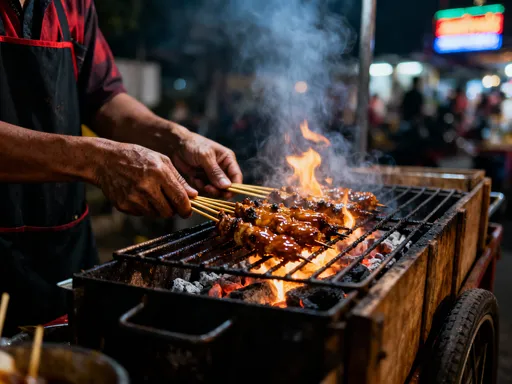
One of the most iconic dishes you’ll encounter is kdam chha, a stir-fried crab dish cooked with garlic, green peppers, and black pepper. Found at night markets and dedicated crab stalls, it’s messy to eat but impossible to forget. The shells are cracked open just enough to expose the meat, which soaks up the bold, savory sauce. You’ll need a small hammer or the back of a spoon, but the effort is worth it. Another favorite is cha kh’nhei, beef skewers marinated in soy sauce, garlic, and palm sugar, then grilled over open flame. The edges char slightly, creating a smoky crust that gives way to tender, sweet-salty meat.
And then there’s the humble grilled corn, sold by women pushing wooden carts through traffic. Coated in a mixture of salt, butter, and sometimes a touch of chili, it’s simple but deeply satisfying—especially when eaten while watching the sunset over the Tonlé Sap River.
But street food here is more than just sustenance. It’s a social equalizer. Office workers in crisp shirts eat beside construction laborers on break. Families gather around low tables, sharing plates and laughter. Even business meetings often happen over steaming bowls of noodles. This communal aspect is central to Cambodian dining culture. Meals are rarely solitary; they’re moments of connection, brief respites in a busy day.
For travelers, navigating street food safely is a common concern—and rightly so. The good news is that most vendors rely on repeat customers, so hygiene is often better than it appears. Look for stalls with high turnover, where food is cooked to order and served hot. Avoid anything sitting out in the open for hours, especially in the midday heat. Stick to bottled or filtered water, and opt for drinks made with boiled water, like tea or coffee. When in doubt, follow the locals. If a stall is packed with Cambodians, it’s probably safe—and delicious.
Hidden Eateries: Off-the-Beaten-Path Gems Only Locals Know
While markets and street carts offer an accessible entry point, some of Phnom Penh’s most memorable meals happen in places without signs, names, or online listings. These are the spots discovered not through apps, but through wandering, gesturing, and trusting a smile. One morning, drawn by the scent of simmering broth, I found myself near Wat Phnom, the city’s oldest temple. Just off the main path, a group of elderly locals sat on small stools around a low table, spooning porridge from shared bowls.
The vendor, a woman in her seventies, stirred a large pot of rice porridge over a portable gas stove. She ladled a portion into a bowl and topped it with sach chrouk—shredded pork floss—and a sprinkle of fried garlic. I sat beside a man who nodded in greeting, then offered me a spoonful of his own dish as a sign of welcome. The porridge was silky, comforting, and deeply nourishing—the kind of food that feels like care. This wasn’t a performance for tourists; it was breakfast as it’s eaten every day by thousands of Cambodians.
Another discovery came along the riverfront at dawn. As the city slowly woke, a line formed at a small cart selling banh chao, a crispy rice pancake filled with bean sprouts, ground pork, and egg. The vendor flipped each pancake with precision, folding it in half and serving it with a side of tangy fish sauce. I watched as fishermen, joggers, and monks in saffron robes all stopped for a bite. There was no menu, no price list—just trust in the routine.
These moments of discovery are what make Phnom Penh so special. They can’t be rushed or forced. They happen when you put away the map, silence the guidebook, and let curiosity lead. The reward isn’t just a great meal—it’s a fleeting but real connection to the city’s heartbeat. And often, the best way to find these places is to return to the same street, same corner, same vendor, day after day. Build familiarity. Smile. Point. Say “thank you” in Khmer—ahn koor. Over time, you’ll be greeted like family.
Modern Twists: How Phnom Penh Balances Tradition and Innovation
While the soul of Phnom Penh’s cuisine lies in its streets and markets, a quiet revolution is unfolding in its cafes and restaurants. A new generation of Cambodian chefs and entrepreneurs is reimagining traditional flavors with modern techniques and global influences. This isn’t about replacing the old, but about expanding it—adding new chapters to an already rich story.
One evening, I visited a small café tucked behind a quiet alley in the BKK1 neighborhood. The space was minimalist—wooden tables, soft lighting, and a playlist of Khmer pop from the 1960s. The menu was short but thoughtful. I ordered amok, Cambodia’s most famous dish: a delicate fish curry steamed in banana leaves with coconut milk, lemongrass, and turmeric. But here, it arrived not in a leaf, but as a perfectly set custard in a ceramic ramekin, topped with microgreens and a drizzle of tamarind gel. The flavors were unmistakably Khmer, but the presentation was modern, elegant, and deeply respectful of the original.
What’s inspiring about this movement is its roots in pride. Young Cambodians are reclaiming their culinary heritage, not as something frozen in time, but as a living, evolving tradition. They’re opening bakeries that blend French techniques with local ingredients—croissants filled with red bean paste, or baguettes stuffed with grilled pork and pickled vegetables. They’re launching food tours that highlight neighborhood kitchens, not just famous landmarks. And they’re using social media to share their culture with the world, not as exotic spectacle, but as something to be celebrated.
Yet, despite this innovation, tradition remains dominant. You won’t find fusion for the sake of trendiness. Instead, you’ll see thoughtful reinterpretations that honor the past while embracing the present. It’s a balance that feels natural, not forced. And for visitors, it means you can enjoy both the smoky intensity of a street-side stir-fry and the refined elegance of a modern tasting menu—all in the same city, sometimes just blocks apart.
Dining Etiquette and Cultural Insights: Eating Like a Local
To truly appreciate Phnom Penh’s food, it helps to understand how Cambodians eat. Meals are typically served family-style, with several shared dishes placed in the center of the table. Rice is the foundation, and most dishes are designed to complement it. Unlike in Western dining, where each person gets their own plate, here, everyone eats from the same bowls, using spoons and forks—never chopsticks, except with certain Chinese-influenced dishes.
One custom that may surprise visitors is the practice of leaving a small amount of food on your plate. In Cambodia, finishing every bite can signal that you’re still hungry. Leaving a little behind is a polite way of saying, “I am full and satisfied.” It’s a subtle but meaningful gesture—one that reflects the culture’s emphasis on modesty and gratitude.
I learned this the hard way during a meal with a local family. After polishing off my portion of prahok ktis—a creamy dip made with fermented fish, coconut milk, and pork—I was immediately offered seconds. When I declined, my host laughed gently and said, “Next time, leave a bite. Then we’ll know you’re done.” It was a small lesson, but one that deepened my respect for the nuances of Khmer hospitality.
Another important note: while Westerners may describe certain foods as “daring” or “exotic,” it’s best to avoid that language in Cambodia. What might seem unusual to a visitor—such as grilled insects or fermented fish—is simply food to locals. It’s part of their daily diet, not a spectacle. Approach every dish with openness, not judgment. A smile, a nod, and a willingness to try go much further than perfect pronunciation.
And when you do try something new, don’t hesitate to express appreciation. Saying “Ahn koor” after a meal isn’t just polite—it’s a way of acknowledging the care that went into preparing it. In a country shaped by resilience and generosity, that small phrase carries weight.
Final Reflections: Why Phnom Penh’s Food Stays With You
Long after I left Phnom Penh, the flavors lingered—not just on my palate, but in my memory. I still recall the laughter shared over a crowded table of grilled meats, the quiet comfort of a dawn porridge bowl, the surprise of a fruit shake made from something I couldn’t name but instantly loved. These weren’t just meals; they were moments of human connection, each one rooted in generosity and tradition.
What makes Phnom Penh’s food so unforgettable is not just its boldness or variety, but what it represents. Cambodian cuisine carries history—centuries of trade, influence, and survival. It speaks of resilience, of a people who have rebuilt and reimagined their lives time and again. And yet, at its core, it is joyful. There is celebration in the sizzle of a wok, in the sharing of a single spoon, in the way a stranger offers you a taste of their breakfast.
For travelers, this city offers a powerful lesson: the best way to understand a culture is to eat with it. Not just to consume, but to participate. To sit on a plastic stool, to get your hands messy, to say “thank you” in a language you’re still learning. To let food be your guide.
So come to Phnom Penh hungry. Come with curiosity. Come ready to be welcomed not as a guest, but as part of the table. Because in this city, every meal is an invitation—and the most unforgettable journeys begin not with a map, but with a bite.