Colors, Curves, and Caribbean Soul: Montego Bay’s Architectural Rhythm
Walking through Montego Bay, I didn’t just see buildings—I felt stories. The pastel cottages with gingerbread trim, the colonial relics humming with history, the bold fusion of Afro-Caribbean spirit and tropical function—it all pulses with artistic life. Architecture here isn’t just structure; it’s melody, color, and resistance. This is more than design—it’s identity written in wood, iron, and sunlight. You haven’t truly seen Jamaica until you’ve read its soul through its streets.
First Impressions: Where Art Meets the Urban Landscape
The moment visitors step into Montego Bay, they are greeted by a built environment that feels alive. Unlike the sterile uniformity of many tourist-centric cities, this coastal gem presents an organic tapestry of color, form, and texture. Buildings rise not as monolithic statements but as personal expressions—homes painted in sun-bleached coral, sky blue, and mango yellow, each shade telling a quiet story of pride, heritage, and resilience. The streets curve intuitively, following the land’s natural contours rather than imposing rigid grids, allowing breezes to flow and views to unfold. This is architecture shaped not only by climate but by culture.
What sets Montego Bay apart from other Caribbean destinations is the seamless integration of beauty and utility. In the tourist corridors near the waterfront, resorts showcase open-air lobbies, wide verandas, and water features designed to invite relaxation. Yet just a few blocks inland, in the neighborhoods where locals live and work, a different rhythm emerges. Here, homes may be modest, but they are rarely plain. Hand-painted shutters, mismatched tiles, and repurposed materials speak to creativity born of necessity. Fences are crafted from driftwood or salvaged iron, and doors are adorned with intricate carvings or vibrant murals. This contrast isn’t a divide—it’s a dialogue between tradition and modernity, between global appeal and local authenticity.
Montego Bay’s architectural identity stands out in the wider Caribbean context because it refuses to be categorized. While some islands lean heavily into French colonial elegance or Dutch simplicity, Jamaica’s second-largest city embraces a layered aesthetic—British foundations overlaid with African rhythms, Spanish-influenced courtyards, and modern tropical adaptations. The result is a visual language that is both familiar and distinctly its own. This city doesn’t just house people; it sings to them, using light, shadow, and color as its instruments.
Colonial Echoes: The Legacy of Georgian and Victorian Design
Scattered throughout Montego Bay are remnants of a colonial past, preserved not as relics of oppression but as architectural milestones in the island’s evolving story. These structures, primarily from the 18th and 19th centuries, reflect the Georgian and Victorian styles introduced during British rule. Symmetrical facades, evenly spaced windows, and central doorways define the Georgian influence, while later Victorian elements include ornate woodwork, gabled roofs, and decorative brackets. Though many of these buildings have been repurposed—converted into shops, offices, or guesthouses—their core design principles remain intact, offering a window into Jamaica’s layered history.
One of the most enduring legacies of this era is the adaptation of European forms to Caribbean conditions. High ceilings, for example, were not merely aesthetic choices but practical responses to heat. They allowed hot air to rise, creating a natural convection current that cooled interior spaces long before the advent of air conditioning. Similarly, shuttered windows—often painted in crisp white or deep green—served dual purposes: they provided privacy while enabling airflow and protection during storms. Thick masonry walls, constructed from locally sourced stone and lime mortar, offered thermal mass, absorbing heat during the day and releasing it slowly at night.
In certain districts, particularly in the older sections near the original town center, clusters of these buildings still stand. Their presence speaks to a period of urban planning that, while rooted in colonial administration, gradually gave way to local reinterpretation. Over time, residents softened the rigidity of colonial design, adding bright colors, informal extensions, and open-air kitchens. The original symmetry might remain, but it now coexists with vibrant shutters, potted plants spilling over balconies, and handcrafted signage. This blending of form and function, of imposed order and organic growth, illustrates how architecture in Montego Bay has always been a site of negotiation—between power and identity, between past and present.
Gingerbread Revival: Jamaica’s Signature Architectural Gem
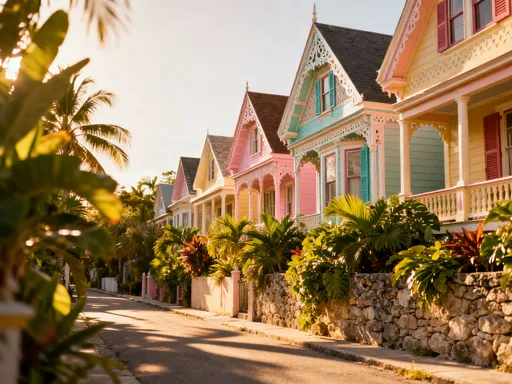
No architectural style captures the soul of Jamaica quite like the gingerbread house. With their steeply pitched roofs, intricate latticework, and wraparound verandas supported by slender wooden columns, these homes are more than charming—they are cultural icons. Originating in the late 19th century, gingerbread architecture emerged as a unique fusion of Victorian-era craftsmanship and Caribbean ingenuity. Though inspired by imported designs, these houses were reimagined using local hardwoods like mahogany and cedar, and built by skilled Jamaican carpenters whose artistry turned functional needs into visual poetry.
The name “gingerbread” refers not to the material but to the delicate, lace-like woodwork that adorns eaves, gables, and porches. This fretwork, often hand-carved, serves both decorative and practical roles. It allows air to circulate freely while filtering sunlight and providing shade—a necessity in a climate defined by intense sun and frequent rain. The steep roofs, another hallmark, efficiently shed heavy tropical downpours, while the elevated foundations protect against flooding and improve ventilation beneath the living space. Every element is intentional, every curve functional.
While gingerbread homes were once more widespread, urban development and shifting tastes led to a decline in their construction by the mid-20th century. In recent decades, however, a quiet revival has taken root. Preservationists, historians, and local architects have recognized these houses as vital parts of Jamaica’s cultural heritage. Restoration projects, often community-driven, have brought neglected structures back to life. Some have been converted into cultural centers, boutique inns, or family museums, ensuring that their stories continue to be told. More than just saving buildings, these efforts affirm a national pride in craftsmanship and identity. The gingerbread house is not a relic—it is a living tradition, a reminder that beauty and resilience can grow from the same foundation.
Tropical Modernism: Function, Light, and Local Innovation
As Montego Bay has evolved, so too has its architectural language. Today, a new wave of design—often referred to as tropical modernism—balances contemporary aesthetics with environmental intelligence. This approach is not about rejecting the past but reinterpreting it for the present. Architects are increasingly prioritizing sustainability, comfort, and harmony with the landscape, creating spaces that feel both modern and deeply rooted in place. Open-air layouts, indoor-outdoor living, and passive cooling strategies define this movement, which is visible in everything from private homes to eco-conscious resorts.
One of the defining features of tropical modernism in Montego Bay is the emphasis on natural ventilation. Rather than relying on energy-intensive air conditioning, buildings are oriented to capture prevailing breezes. Large, operable windows, cross-ventilation plans, and strategically placed courtyards allow air to flow freely, reducing indoor temperatures without mechanical assistance. Roof overhangs and shaded verandas extend living spaces outdoors while protecting interiors from direct sun. These are not new ideas—they echo principles found in colonial and gingerbread designs—but they are now being refined with modern materials and precision.
Local materials play a crucial role in this architectural evolution. Stone quarried from nearby hills, reclaimed wood, and hand-laid brick not only reduce the carbon footprint of construction but also give buildings a sense of belonging. A home built with rough-hewn stone and dark hardwood beams doesn’t just look like it belongs in Jamaica—it feels like it grew from the land. Even in luxury developments, there is a growing preference for authenticity over artificial opulence. Instead of imported marble and glass towers, designers are opting for textured walls, thatched roofs, and handcrafted details that honor tradition while embracing innovation.
This shift reflects a broader awareness of environmental responsibility. With rising temperatures and more intense weather patterns, resilient design is no longer optional—it is essential. Green roofs, rainwater harvesting systems, and solar panels are becoming more common, especially in new residential and hospitality projects. Yet sustainability here is not expressed through cold efficiency; it is warm, human, and beautiful. In Montego Bay, eco-friendly design doesn’t mean sacrificing comfort or style—it means enhancing both through thoughtful, context-sensitive choices.
Street Art and Urban Texture: Facades as Canvases
Wander through Montego Bay’s residential lanes and you’ll discover that architecture extends beyond walls and roofs—it lives in paint, in pattern, in personal expression. Ordinary facades become vibrant declarations of identity, transformed by murals, hand-painted signs, and decorative shutters. These are not commissioned artworks in the traditional sense, nor are they always permanent, but they carry deep meaning. A bright blue door with a sun motif isn’t just eye-catching—it may symbolize hope, energy, or spiritual protection. A wall painted with waves and palm trees isn’t merely decorative; it’s a love letter to the island itself.
This grassroots artistry is especially visible in neighborhoods where formal infrastructure is limited. Where paint is scarce, creativity flourishes. Residents use what they have—leftover house paint, recycled wood, fabric scraps—to personalize their surroundings. A simple gate might be turned into a mosaic of broken tiles. A crumbling wall could become a canvas for a mural depicting local heroes, agricultural scenes, or biblical imagery. These interventions are acts of care, transforming neglected spaces into points of pride. They reflect a cultural instinct to beautify, to assert dignity through color and craft.
Community-led beautification efforts have also gained momentum in recent years. Local groups, often supported by non-profits or municipal programs, organize painting days, mural festivals, and garden installations. These initiatives do more than improve aesthetics—they strengthen social bonds, foster civic pride, and create safer, more welcoming environments. In some areas, entire streets have been unified by a color scheme or theme, turning clusters of homes into open-air galleries. This isn’t gentrification driven by outside investment; it’s organic, bottom-up transformation led by those who live there.
What makes this urban artistry so powerful is its authenticity. Unlike curated gallery spaces, these expressions are unfiltered and immediate. They respond to the rhythms of daily life—celebrations, hardships, faith, and resilience. A freshly painted house might mark a new beginning after a storm; a mural could honor a lost neighbor. In Montego Bay, the streets don’t just shelter people—they speak for them. Every brushstroke is a word in an ongoing conversation about who they are and what they value.
Sacred Spaces: Churches, Courthouses, and Cultural Symbols
Among the most expressive buildings in Montego Bay are its sacred and civic structures. Churches, in particular, stand as both spiritual centers and architectural landmarks. Small chapels with corrugated metal roofs and bright blue or yellow walls rise beside larger, more formal congregations with pointed spires and stained glass. Many were built by communities pooling resources, their construction a testament to faith and collective effort. The interiors may be simple, but the exteriors often burst with color and symbolism. Crosses are painted in gold, doors are trimmed in white, and surrounding gardens are kept with meticulous care.
These churches are more than places of worship—they are anchors of community life. They host weddings, funerals, youth programs, and food drives. Their presence on street corners and hilltops gives the city a moral and visual rhythm. Even for those who do not attend services, the sight of a well-kept church offers reassurance, continuity, and beauty. In times of hardship, they become shelters, meeting points, and centers of solidarity. Their architecture, whether humble or grand, reflects a deep commitment to dignity and hope.
Courthouses and other civic buildings, though fewer in number, also contribute to the city’s architectural narrative. Some retain neoclassical elements—columns, pediments, symmetrical layouts—echoing ideals of justice and order. Others have been adapted over time, their original facades softened by climbing vines or repainted in bolder tones. What unites them is their role as symbols of public life. They are places where decisions are made, records kept, and rights affirmed. Their design, even when understated, communicates stability and permanence in a world of change.
Together, these structures form a silent chorus of cultural endurance. They are not museums, but living institutions, shaped by generations of use and care. Their architecture—whether through a steeple piercing the sky or a courthouse clock facing the square—reminds residents and visitors alike that Montego Bay is more than a tourist destination. It is a community with memory, values, and a shared sense of place. These buildings stand not to impress, but to serve, and in doing so, they become monuments to the everyday.
Designing the Future: Preservation, Tourism, and Authentic Identity
As Montego Bay continues to grow, it faces a critical question: how to develop without losing its soul. The pressures of tourism, real estate investment, and urban expansion threaten to homogenize the city’s architectural character. All-inclusive resorts with generic designs, cookie-cutter housing developments, and imported construction styles risk erasing the very qualities that make this place unique. Yet, within these challenges lie opportunities—for thoughtful planning, community engagement, and cultural renaissance.
Preservation is no longer just about saving old buildings; it’s about safeguarding a way of seeing and being in the world. Architects, planners, and local leaders are increasingly advocating for design codes that protect historic districts, encourage the use of traditional materials, and support adaptive reuse. Some new developments are incorporating gingerbread motifs, veranda-centric layouts, and vibrant color palettes as a nod to local heritage. These aren’t pastiches—they are respectful evolutions, blending tradition with contemporary needs.
At the same time, there is a growing movement to empower local artisans, builders, and homeowners. Training programs in traditional carpentry, masonry, and decorative painting are helping to pass skills to a new generation. Community land trusts and cooperative building initiatives are enabling residents to shape their own neighborhoods without displacement. These efforts ensure that architectural authenticity isn’t outsourced or commodified—it remains rooted in the people who call Montego Bay home.
The future of Montego Bay’s architecture lies in balance. It must welcome progress while honoring memory, embrace innovation while respecting craft, and serve both visitors and residents with equal care. The city’s buildings have always been more than shelter—they are storytellers, witnesses, and participants in the island’s ongoing journey. As long as that rhythm continues—the pulse of color, the curve of a roof, the whisper of wood in the wind—Montego Bay will remain a living canvas, ever-evolving, yet forever Jamaican.