This Is Where Light Meets Legacy: Prague’s Cultural Gems Through My Lens
You know that feeling when a city just clicks through your camera lens? Prague did that for me. Beyond the postcard views, I discovered soul in its cultural spaces—where history hums through old stone and golden light. From grand theaters to quiet courtyards, every frame told a story. If you're chasing authentic moments, not just snapshots, this is your sign. Let me show you the Prague I fell in love with—one shutter click at a time.
The Magic of Prague: Why Culture and Photography Belong Together
Prague is not a city that reveals itself all at once. Its charm unfolds slowly, like the turning of pages in an ancient manuscript. What makes it exceptional for photography is not merely its beauty, but the depth of its cultural layers. Every building, bridge, and alleyway carries centuries of stories—Habsburg emperors, Bohemian kings, revolutions, resilience, and rebirth. These narratives are embedded in the architecture, visible in weathered facades, gilded domes, and cobblestone streets worn smooth by time. When you photograph Prague, you're not just capturing scenery; you're documenting a living heritage.
There’s a quiet emotional resonance that comes from photographing spaces steeped in history. Standing in the shadow of St. Vitus Cathedral or walking through the silent corridors of the Old Royal Palace, you sense the weight of centuries. The light that filters through stained glass or dances across Baroque stuccowork isn’t just illumination—it’s continuity. It’s the same sunlight that touched the hands of artisans, scholars, and monarchs long before modern lenses existed. This connection between past and present elevates cultural photography from mere documentation to a form of storytelling.
Unlike generic tourist snapshots, images taken in Prague’s cultural spaces invite reflection. A photograph of a statue on Charles Bridge becomes more meaningful when you understand its religious symbolism. A shot of the National Theatre gains depth when you know it was funded by public donations as a symbol of national pride. These contexts transform a simple picture into a visual narrative. For travelers who seek authenticity, photographing culture offers a way to engage more deeply with a destination. It encourages slowing down, observing details, and appreciating the craftsmanship and spirit behind each landmark.
Prague Castle Complex: A Photographer’s Dream in Stone and Light
Perched high above the Vltava River, the Prague Castle complex is a masterpiece of architectural evolution, blending Romanesque, Gothic, Renaissance, and Baroque styles across nearly a thousand years. For photographers, it’s a paradise of contrasts—grand scale and intimate details, dramatic silhouettes and delicate ornamentation. The complex isn’t just one building; it’s a city within a city, offering endless compositions. From the soaring spires of St. Vitus Cathedral to the pastel-colored houses of Golden Lane, every corner presents a new opportunity to capture light, texture, and history in harmony.
St. Vitus Cathedral, with its intricate tracery and twin spires, dominates the skyline and demands attention. The best time to photograph it is early morning, when the rising sun bathes the south facade in warm, golden light. Shadows stretch long across the courtyard, emphasizing the cathedral’s verticality and the rhythm of its buttresses. For a more intimate perspective, move closer to capture details—the carved saints in the portals, the mosaic of the Last Judgment above the Golden Gate, or the play of light through the stained-glass windows designed by Alfons Mucha. A wide-angle lens helps convey the cathedral’s magnitude, while a telephoto lens isolates architectural patterns and textures.
The Old Royal Palace, though less flamboyant, offers a more human scale. Its Great Hall, once the seat of Bohemian kings, features ribbed vaulting and massive stone fireplaces. Photographers can focus on symmetry and perspective, using the long hall to create leading lines that draw the eye toward the far end. The surrounding gardens provide peaceful vantage points, especially in spring when blooming flowers contrast with ancient stone. Golden Lane, a row of tiny 16th-century houses once home to castle guards and artisans, is ideal for close-up photography. The peeling paint, flower boxes, and uneven doorways tell stories of everyday life amidst imperial grandeur.
To avoid crowds, arrive at opening time—usually around 9 a.m.—when the complex is still quiet and bathed in soft morning light. Late afternoon also offers beautiful illumination, particularly on the northern side of the castle. A tripod is useful for interior shots where lighting is low, but always check for restrictions, as some areas prohibit their use. The key to capturing Prague Castle is patience: wait for the right light, the right shadow, the right moment when a visitor walks through the frame just so. These small decisions turn a good photo into a lasting impression.
The National Theatre: Where Drama Lives Beyond the Stage
Rising elegantly from the riverbank, the National Theatre is one of Prague’s most iconic cultural landmarks. Its neo-Renaissance façade, crowned with a sculpted quadriga and adorned with allegorical figures, speaks of national pride and artistic ambition. Completed in 1881 through public donations, it stands as a monument to Czech identity and resilience—rebuilt after a fire just months after opening. For photographers, the theater offers both grand exterior compositions and, during guided tours, glimpses into opulent interiors that rival any European opera house.
The best exterior shots are taken from the opposite bank of the Vltava, especially at golden hour. As the sun dips below the skyline, the theater’s pale stone glows, and its reflection shimmers in the water. A long lens compresses the scene, bringing the building closer and enhancing the warmth of the light. Including the Charles Bridge in the foreground adds context and depth, framing the theater within the city’s historic fabric. Night photography is equally rewarding—the building is beautifully lit, with spotlights accentuating its dome and sculptural details.
Inside, the auditorium is a feast for the eyes: red velvet seats, gilded carvings, a magnificent chandelier, and a ceiling painting depicting Slavic mythology. Photography is typically allowed during guided tours, but flash is prohibited to protect the delicate finishes. A fast prime lens with a wide aperture (f/1.8 or f/2.8) works well in low light. Focus on details—the intricate plasterwork, the ornate balconies, the presidential box with its royal insignia. These elements convey the theater’s grandeur without needing wide shots.
The National Theatre is more than a visual subject; it’s a living institution. Attending a performance—whether opera, ballet, or drama—adds emotional depth to your photographs. Knowing that artists have graced this stage for over a century enriches your perspective. Even if you can’t go inside, photographing the theater from the riverside walkway connects you to Prague’s artistic heartbeat. It’s a reminder that culture isn’t just preserved in museums—it thrives in spaces where people gather to create and witness beauty.
Klementinum Library: Step Into a Baroque Daydream
Hidden within the former Jesuit college of Klementinum, the Baroque Library Hall is one of Europe’s most breathtaking interiors. Vaulted ceilings soar overhead, painted with celestial frescoes depicting the heavens, the four continents, and the triumph of the Church. Gilded bookshelves line the walls, filled with antique volumes in Latin and theology. A celestial globe and a terrestrial globe—one rotating with the stars, the other mapping the known world of the 18th century—sit beneath the dome, symbols of knowledge and enlightenment. To step inside is to enter a world where art, science, and faith once intertwined.
Photographing the Klementinum Library is a challenge due to strict rules: no flash, no tripods, and no close contact with exhibits. Yet, with the right approach, you can still capture its essence. Natural light filters through high windows, illuminating the frescoes in soft, diffused tones. A wide-angle lens (around 16–35mm) is essential to include the full span of the ceiling and the symmetry of the room. Shoot from the center of the hall to emphasize perspective, with the globes in the foreground leading the eye upward. If allowed, use a high ISO setting (800–1600) to maintain shutter speed without blur.
The atmosphere is one of hushed reverence. Visitors speak in whispers, and the air feels still, as if time itself slows within these walls. This silence is part of the photographable experience—the contrast between the ornate decor and the quiet contemplation it inspires. While you can’t linger indefinitely, taking a moment to absorb the space enhances your shots. Look for reflections in the glass-enclosed globes, or frame the library through doorways and arches to add layers to your composition.
The Klementinum also houses a historic astronomical tower with panoramic views of Prague. The climb is steep, but the reward is a unique vantage point—looking down on red rooftops, church spires, and the winding Vltava. This perspective complements the interior grandeur of the library, showing how knowledge once reached both inward and outward, toward the human soul and the cosmos. Visiting the Klementinum is not just about taking pictures; it’s about stepping into a vision of enlightenment that still resonates today.
Jewish Quarter (Josefov): Memory, Architecture, and Quiet Reflection
The Jewish Quarter, known historically as Josefov, is one of Prague’s most poignant cultural districts. For centuries, it was home to one of Europe’s oldest and most vibrant Jewish communities. Today, its synagogues, cemetery, and museum stand as testaments to endurance, creativity, and remembrance. Photographing this area requires sensitivity—these are not just architectural subjects, but sacred spaces filled with memory. The goal is not to exploit emotion, but to honor it through thoughtful composition and respectful presence.
The Old New Synagogue, dating back to the 13th century, is the oldest active synagogue in Europe. Its sober Gothic exterior, with pointed arches and minimal ornamentation, contrasts with the rich symbolism within. Photography inside is generally not permitted, out of respect for worship and tradition. However, the exterior offers powerful opportunities—especially in soft morning light, when shadows accentuate the stonework and the surrounding alleyways are quiet. Framing the synagogue with the surrounding buildings conveys its place within the urban fabric, a sanctuary amidst the flow of daily life.
The Old Jewish Cemetery is perhaps the most visually striking and emotionally heavy site. Founded in the 15th century, it contains over 12,000 visible tombstones, packed tightly in layers due to centuries of limited space. The weathered stones, inscribed with Hebrew script, lean at odd angles, creating a forest of memory. Light here moves slowly, filtering through tree branches and casting dappled patterns on the ground. A polarizing filter can help manage contrast between bright sky and dark shadows. Wide shots capture the density and texture of the cemetery, while close-ups reveal details—carved symbols, eroded letters, flowers left in remembrance.
Other synagogues, like the Spanish Synagogue with its Moorish Revival interior or the Pinkas Synagogue, which bears the names of Holocaust victims inscribed on its walls, offer different visual and emotional experiences. Photography rules vary—some allow limited non-flash photography, others prohibit it entirely. Always observe posted signs and follow staff guidance. The act of photographing Josefov is not about collecting images, but about bearing witness. Each shot should reflect awareness of the lives that shaped this place, the tragedies it has seen, and the resilience it represents.
Charles Bridge at Dawn: Capturing Culture in Motion
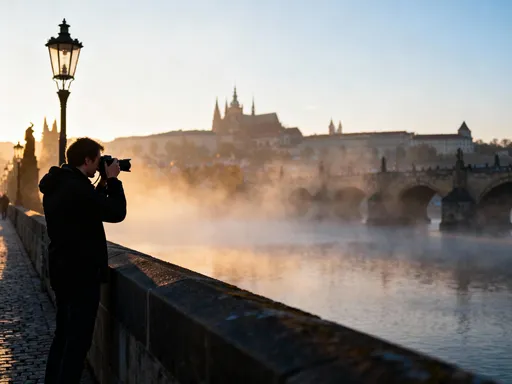
No image of Prague is more iconic than Charles Bridge at sunrise. By midday, it’s crowded with tourists, street vendors, and performers. But in the early morning, especially in spring or autumn, it transforms into a place of stillness and poetry. Mist rises from the Vltava, softening the outlines of spires and bridges. The 30 Baroque statues that line the balustrade stand like silent sentinels, their faces worn by centuries of wind and rain. The only sounds are footsteps, the lap of water, and the distant call of a swan. This is when the bridge feels most alive—not with people, but with atmosphere.
Arriving before 6 a.m. ensures the best light and fewest distractions. The east-facing side catches the first golden rays, illuminating the statues in warm tones. Use a narrow aperture (f/8–f/11) to keep both foreground and background in focus, especially when including the river and castle in the distance. A tripod, if permitted, allows for longer exposures that smooth the water and enhance reflections. Look for symmetry—align the statues along the centerline, or frame the bridge as a leading line drawing the eye toward Prague Castle.
The river itself becomes a mirror at this hour. Capturing the reflection of the bridge, the towers, and the sky doubles the visual impact. A slight ripple adds texture without breaking the image. Include small human elements—a lone walker, a cyclist, a fisherman—to convey scale and solitude. These subtle details make the scene feel intimate rather than postcard-perfect. The bridge is not just a structure; it’s a connector of eras, a witness to history, and a stage for daily life. Photographing it at dawn is a way of participating in its quiet rhythm.
As the sun rises higher, the mood shifts. The mist burns off, the colors sharpen, and the city wakes up. This transition is worth documenting too—how a single place can feel so different within an hour. The Charles Bridge is more than a tourist attraction; it’s a living artery of Prague. Every stone, every statue, every ripple in the water carries meaning. To photograph it thoughtfully is to engage with the soul of the city.
Hidden Courtyards and Forgotten Theaters: Off-the-Beaten-Path Culture
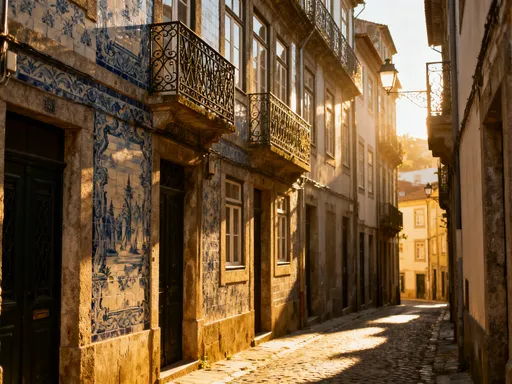
Beyond the famous landmarks, Prague reveals its true character in quiet corners—hidden courtyards, forgotten arcades, and unmarked theaters tucked behind unassuming doors. These spaces are not on every map, but they are rich with atmosphere and photographic potential. They speak of a city that values privacy, history, and the beauty of the overlooked. Discovering them requires curiosity, a willingness to wander, and an eye for detail. A cracked façade, a wrought-iron gate, a patch of ivy climbing an ancient wall—these are the textures of authentic Prague.
In the Old Town, narrow passageways lead to inner courtyards that feel like secret gardens. Some are open to the public, others require a key or a friendly nod from a resident. These spaces often contain remnants of old wells, Baroque fountains, or centuries-old staircases. Morning light filters through upper windows, casting geometric shadows on the ground. A standard zoom lens (24–70mm) works well here, allowing flexibility between wide scenes and tighter details. Focus on contrasts—rough stone against smooth plaster, modern graffiti beside medieval carvings, sunlight against shadow.
Prague also has a network of lesser-known theaters and cultural halls, many housed in historic buildings. Some, like the Estates Theatre, are famous for Mozart premieres, but others operate quietly, hosting small productions or community events. These venues often allow photography in lobbies or during off-hours. The interiors may feature original woodwork, vintage posters, or faded velvet curtains—each a clue to a long artistic tradition. Even if you can’t go inside, photographing the façades at twilight, when windows glow from within, creates a sense of mystery and invitation.
Finding these hidden spots takes time. Talk to locals, consult historic maps, or join a walking tour focused on architecture or urban history. But some of the best discoveries happen by accident—turning a corner, noticing an open gate, following the sound of a violin from an unseen courtyard. These moments remind us that travel is not just about destinations, but about attention. When you photograph these overlooked spaces, you’re not just recording what’s visible—you’re preserving the quiet poetry of everyday beauty.
Framing the Soul of a City
Photographing Prague’s cultural gems is more than a technical exercise—it’s an act of connection. Each image you take is a conversation between your eye and the city’s spirit. It’s about patience, respect, and presence. The most powerful photographs are not those with perfect exposure or composition, but those that carry emotion, memory, and meaning. They remind us not just of where we’ve been, but of how we felt when we were there.
As you explore Prague, let your lens guide you beyond the obvious. Seek out the quiet courtyards, the morning light on ancient stone, the hands of a street musician playing in a shadowed arcade. These are the moments that define a journey. Let your camera be not just a recorder, but a translator—turning light and legacy into images that speak across time.
Prague invites you to look deeper. It rewards the slow traveler, the careful observer, the respectful guest. So go ahead—pack your camera, step into the dawn, and let this city reveal itself, one frame at a time. Let your photographs not only capture Prague, but connect with it. Because in the end, the best images are not just seen—they are felt.