Lost in the Soul of Vang Vieng: Where Culture Comes Alive
Have you ever wandered somewhere that quietly reshaped your understanding of travel? Vang Vieng, often labeled for its rivers and cliffs, holds something deeper—the pulse of Lao culture in its temples, villages, and daily rituals. Far beyond tubing and trekking, the real magic lies in moments of connection: a monk’s chant at dawn, handwoven patterns telling ancient stories, or a shared meal in a riverside village. This is travel that doesn’t just entertain—it transforms.
Beyond the Brochure: Rethinking Vang Vieng
Vang Vieng, nestled in the lush karst landscape of central Laos, has long been known as a haven for adventure seekers. For years, its turquoise river and dramatic limestone formations drew travelers eager for tubing, rock climbing, and zip-lining. While these activities still attract visitors, a quiet shift is underway—one that moves beyond adrenaline and into authenticity. Today’s mindful traveler is less interested in fleeting thrills and more drawn to experiences that offer depth, meaning, and human connection. This evolving perspective reveals a different side of Vang Vieng: one where culture is not a backdrop but the very heartbeat of the journey.
The transformation of Vang Vieng’s tourism identity mirrors a global trend. As overtourism and environmental concerns have reshaped travel ethics, many destinations are reevaluating their offerings. In Laos, community-based tourism initiatives have gained momentum, supported by local cooperatives and international development organizations. These efforts prioritize sustainability, cultural preservation, and equitable income distribution. In Vang Vieng, this means travelers now have access to experiences that go far beyond the riverbank—opportunities to engage with Lao traditions in ways that are respectful, reciprocal, and enriching.
What makes this shift so powerful is its alignment with the true spirit of Lao life. The people of Laos live with a quiet grace, rooted in Buddhist values of compassion, humility, and harmony with nature. Their way of life unfolds in rhythm with the seasons, the rice fields, and the temple bells. To experience Vang Vieng through this lens is to witness a culture that values presence over performance, simplicity over spectacle. It invites travelers not to consume, but to participate—to listen, observe, and learn with open hearts.
The Spiritual Heart: Temples and Daily Devotion
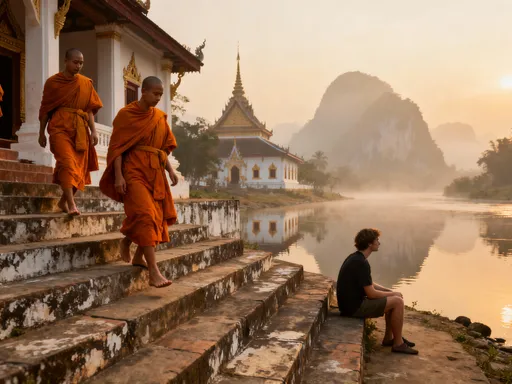
At the center of Lao cultural life stands Theravada Buddhism, a tradition that shapes daily routines, community values, and personal identity. In Vang Vieng, this spiritual foundation is visible in the quiet dignity of its temples, or wats. Wat Jang, one of the oldest and most revered in the area, sits on the edge of town, its golden stupa gleaming under the morning sun. Though modest in size compared to urban temples, it holds profound significance for locals. Each day, monks in saffron robes walk the streets in silent alms-giving processions, receiving offerings of sticky rice, fruit, and tea from residents who line their doorsteps in quiet reverence.
Witnessing this ritual at dawn is a moment of deep stillness. The air is cool, the sky soft with early light, and the only sounds are the rustle of robes and the soft clink of alms bowls. For visitors, observing this practice is not just a cultural spectacle—it is an invitation to slow down and reflect. The act of giving, known as *tam boon*, is central to Buddhist practice in Laos. It is believed to generate merit, not as a transactional exchange, but as a way of cultivating generosity and mindfulness. Travelers are encouraged to observe respectfully, maintaining a quiet distance and dressing modestly out of deference to local customs.
Beyond Wat Jang, smaller village wats offer equally meaningful encounters. In nearby Ban Na, a riverside community accessible by bicycle or kayak, a modest temple hosts daily chanting sessions. Visitors are often welcomed to sit quietly in the shaded courtyard, listening to the rhythmic cadence of Pali scriptures. While participation is not expected, the experience of being present—of feeling the resonance of devotion in a simple wooden hall—can be profoundly moving. These moments remind us that spirituality in Laos is not confined to grand ceremonies but lives in the everyday.
Crafted with Meaning: Traditional Lao Artisanship
Laos has long been celebrated for its rich textile traditions, and Vang Vieng offers access to communities where these crafts are still practiced with pride and precision. In villages like Ban Phone Xai and Ban Na, women sit at handlooms, weaving intricate patterns into cotton and silk. These textiles are more than decorative—they are visual narratives, each motif carrying symbolic meaning. The *naga*, or serpent spirit, represents protection and water; the *dok so fa*, a star-like flower, symbolizes the connection between earth and sky. These designs are passed down through generations, often taught from mother to daughter.
One of the most distinctive aspects of Lao weaving is the use of natural dyes, particularly indigo. Artisans cultivate indigo plants, fermenting the leaves in large vats to produce a deep, enduring blue. The process is labor-intensive and requires patience—each batch must be stirred daily, exposed to air, and tested for color intensity. The result is a dye that ages beautifully, fading into soft gradients over time. In addition to textiles, local craftspeople create bamboo baskets, woven mats, and ceramic pottery using techniques that have changed little over centuries. These items are not made for tourists—they are tools of daily life, designed for function as much as beauty.
Travelers can support these traditions through ethical engagement. Several community cooperatives welcome visitors for short workshops, where guests can try their hand at weaving or natural dyeing under the guidance of local artisans. Purchasing directly from village stalls or cooperative shops ensures that income stays within the community. It is important to approach these interactions with humility—these crafts are not performances but living practices. A simple gesture, such as asking permission before taking photographs or learning a few words in Lao, can go a long way in building mutual respect.
Voices of the Village: Homestays and Human Connection
One of the most transformative ways to experience Vang Vieng’s culture is through homestays in rural villages. These community-based accommodations are not tourist attractions but real homes, where families open their doors to travelers seeking deeper connection. In Ban Na, Ban Tha, and other nearby settlements, homestays offer simple but comfortable lodging—often a private room with a mosquito net, shared bathroom, and access to a family-run kitchen. The experience begins the moment you arrive, often greeted with a traditional *baci* ceremony, where white cotton strings are tied around the wrist to bless the guest and welcome them into the community.
Life in these villages unfolds at a gentle pace. Mornings begin with rice farming or fishing, while children walk to school along dirt paths. Guests are invited to participate in daily routines—helping prepare meals, tending to vegetable gardens, or joining in evening storytelling. One traveler recalled learning to pound sticky rice with a wooden mortar and pestle, a task that seemed simple but required surprising strength and rhythm. Another shared how a grandmother taught her to fold banana leaves into serving containers, each fold precise and purposeful. These small acts of shared labor create bonds that transcend language.
What makes homestays so impactful is their authenticity. Unlike curated cultural shows, these experiences are unscripted and genuine. A meal might consist of grilled fish from the river, fresh herbs from the garden, and a fiery papaya salad made with mortar and pestle. Conversations happen slowly, through gestures, smiles, and the occasional phrase in broken English. Yet, in these moments, a deeper understanding emerges—one that reminds us of our shared humanity. For many visitors, the most lasting memory is not a landmark but a person: a child’s laughter, an elder’s wisdom, a host’s quiet generosity.
Flavors That Tell Stories: The Cultural Language of Food
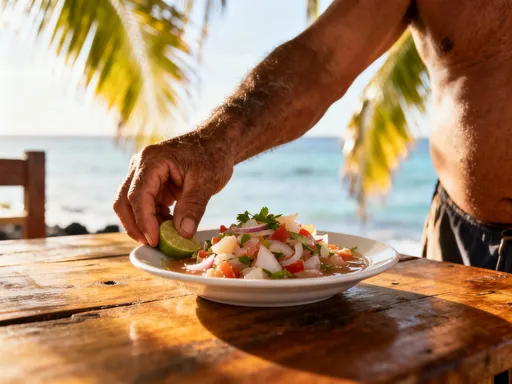
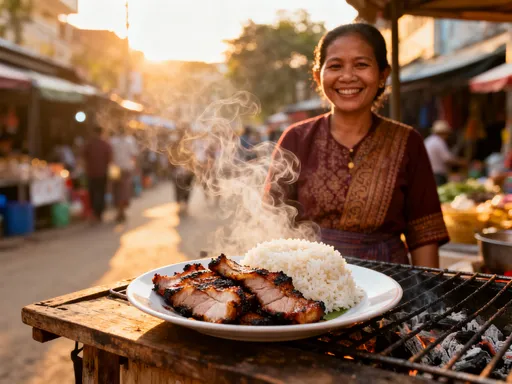
In Laos, food is more than sustenance—it is a language of care, community, and identity. Lao cuisine is bold, fresh, and deeply connected to the land. In Vang Vieng, meals are often centered around sticky rice, served in woven baskets and eaten with the hands. It is the staple of every table, symbolizing unity and nourishment. Dishes like *laap*—a minced meat salad flavored with herbs, lime, and toasted rice powder—and *tam mak hoong*, a spicy green papaya salad, are not just flavorful but layered with meaning. Each ingredient reflects the season, the region, and the family’s preferences.
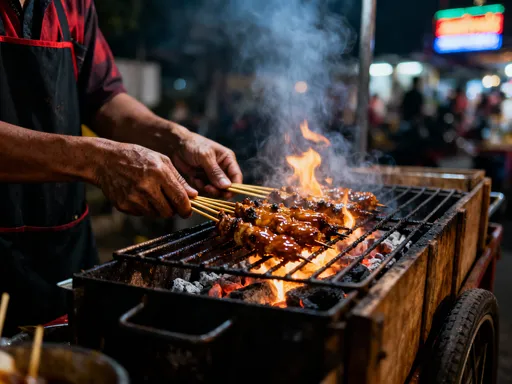
In village homes and family-run restaurants, cooking is a communal affair. Women gather around open fires, stirring large pots of soup or grilling fish on bamboo skewers. Fermented foods, such as *padaek* (fermented fish paste), play a crucial role in Lao flavor profiles, adding depth and umami to curries and dips. While the smell may be strong to unaccustomed noses, it is a testament to traditional preservation methods and the ingenuity of rural kitchens. Meals are served family-style, with dishes placed in the center for everyone to share. There is no rush—eating is a social event, a time for conversation and connection.
For travelers, participating in a cooking class or dining in a village home offers more than culinary skills—it offers insight into Lao values. One popular experience involves visiting a morning market to select ingredients, then preparing a meal alongside a local cook. As you chop herbs, grind spices, and balance flavors, you learn not just *how* to cook but *why* certain combinations matter. A dish’s heat may represent vitality, its sourness the tang of life’s challenges, its sweetness a moment of joy. Food, in this context, becomes a metaphor for life itself—complex, balanced, and best shared.
Festivals and the Rhythm of Time
The cultural calendar in Laos is marked by festivals that reflect both spiritual beliefs and agricultural cycles. While Vang Vieng itself may not host large-scale events, nearby towns and villages celebrate occasions that offer rare glimpses into Lao traditions. Boun That Luang, the national festival held in Vientiane each November, draws pilgrims and dancers from across the country. Though it requires a day trip, its significance is worth noting—dedicated to the That Luang stupa, the festival includes candlelit processions, traditional music, and communal feasting.
More accessible are local *baci* ceremonies, which mark important life events such as births, weddings, or departures. These rituals are based on the belief that a person has 32 guardian spirits, or *khwan*, which can become scattered during times of change. The *baci* ceremony calls these spirits back through chanting, the tying of cotton strings, and offerings of food. Travelers may be invited to attend if they have formed close ties with a host family. Participation is a privilege, not a performance, and requires respectful behavior—dressing modestly, listening quietly, and accepting the string with both hands as a sign of gratitude.
Other seasonal events, such as the Rocket Festival (*Boun Bang Fai*) in May or the boat racing festivals during the rainy season, reflect the agricultural rhythm of rural life. While some of these may include playful or exuberant elements, they are deeply rooted in祈求 for good harvests and community well-being. For travelers, timing a visit around these events can enrich the experience, but the key is not to treat them as spectacles. These are moments of cultural continuity, not entertainment. Observing with humility and seeking to understand their meaning allows for a more meaningful connection.
Traveling with Purpose: How to Engage Respectfully
To truly honor the culture of Vang Vieng, travelers must approach it with intention and awareness. Respect begins with simple actions: covering shoulders and knees when visiting temples, removing shoes before entering homes or sacred spaces, and speaking in soft tones in quiet areas. Photography should always be approached with care—asking permission before taking pictures of people, especially monks or children, is a basic sign of dignity. In many villages, a smile and a polite gesture in Lao, such as *sabaidee* (hello) or *khob chai* (thank you), can open doors more than any guidebook.
Supporting local initiatives is another way to travel responsibly. Instead of booking through international platforms, consider working with community tourism networks that channel income directly to families. Opt for locally owned guesthouses, eat at family-run restaurants, and purchase crafts from village cooperatives. These choices may seem small, but collectively, they help sustain traditions and empower communities. Slow travel—staying longer, engaging deeply, and returning with respect—creates a more meaningful impact than any short-term visit.
Equally important is the mindset with which one travels. Cultural immersion is not about collecting experiences like souvenirs but about cultivating understanding. It requires patience, openness, and a willingness to be changed. A traveler once shared how, after days of quiet observation in a village, she realized her initial desire to “help” had shifted to a desire to “listen.” That shift—from savior to student—is at the heart of respectful travel. It is not about fixing or changing, but about being present, learning, and honoring what already exists.
Conclusion: The Quiet Power of Cultural Discovery
Vang Vieng is more than a destination—it is a doorway. Behind the postcard views of rivers and cliffs lies a living culture, resilient and radiant in its simplicity. The true essence of this place is not found in adrenaline-fueled adventures but in the quiet moments: the echo of a monk’s chant, the rhythm of a loom, the warmth of a shared meal. These are the experiences that linger, that reshape our understanding of what travel can be.
To discover Vang Vieng in this way is to embrace a different kind of journey—one that values connection over convenience, depth over distraction. It invites us to slow down, to listen, and to engage with humility. In a world where travel is often rushed and commercialized, this approach is revolutionary. It reminds us that the most profound adventures are not the ones that take us to the highest peaks, but the ones that bring us closer to the heart of what it means to be human.
So, as you plan your journey, look beyond the brochures. Seek out the temples, the villages, the hands that weave, the voices that sing. Let Vang Vieng not just be a place you visit, but a place that changes you. Because in the end, the most unforgettable destinations are not measured in miles, but in moments of quiet transformation.