Wander Slowly Through Surabaya’s Soul — Where Colonial Echoes Meet Tropical Modernity
You know that feeling when a city surprises you? Surabaya wasn’t on my radar, but its architecture stole my heart. Walking slowly through its streets, I saw colonial facades blend with Javanese motifs and modern grit. This isn’t just a transit stop — it’s a living museum. Let me take you on a quiet journey through hidden verandas, forgotten theaters, and sun-drenched courtyards where history whispers in every brick. Unlike more tourist-frequented Indonesian cities, Surabaya reveals itself only to those who pause, observe, and listen. Its soul is not in grand monuments, but in the quiet dialogue between old and new — a conversation written in stone, wood, and concrete. This is a city shaped by trade, resistance, and reinvention, and its architecture tells the full story.
The Rhythm of Slow Travel in an Urban Jungle
Surabaya, Indonesia’s second-largest city, pulses with the energy of commerce and daily life. Yet beneath its bustling surface lies a quieter rhythm, one best discovered not by itinerary, but by intuition. The practice of slow travel — moving with purpose but without haste — transforms the experience of urban exploration. In Surabaya, this means trading checklists for curiosity, allowing time to notice the curve of a wrought-iron railing or the pattern of light through a latticed window. Unlike the hurried tourist snapping photos from a moving van, the slow traveler learns to read the city like a book, one page at a time.
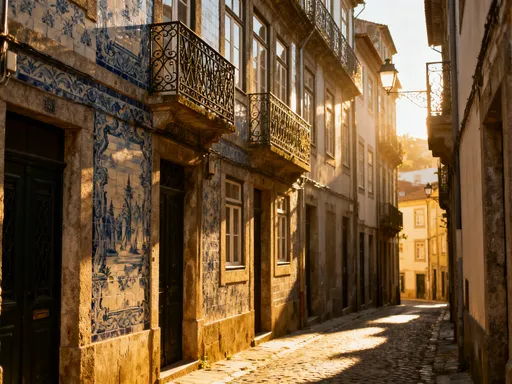
This approach aligns with the Indonesian tradition of jalan-jalan, a phrase that means “to go for a walk” but carries deeper cultural weight. It suggests leisure, connection, and the joy of simply being present. In Surabaya, jalan-jalan becomes a meditative act, a way to absorb the city’s layered identity. You might begin near the Tunjungan area, where the morning sun gilds the facades of 19th-century buildings, their balconies draped in bougainvillea. As you walk, the city reveals subtle details: the texture of weathered plaster, the sound of shutters opening in a century-old shophouse, the scent of kopi tubruk from a street vendor beneath an arched colonnade.
Slowing down also fosters a deeper respect for local life. Surabaya is not a museum exhibit; it is a working city where heritage buildings house banks, schools, and homes. By moving quietly and observing with care, travelers honor the living context of these spaces. This mindful presence allows for unexpected encounters — a shopkeeper sharing the history of his building, a grandmother watering plants on a veranda that hasn’t changed in decades. These moments, fleeting yet profound, are the true rewards of slow urban travel.
Colonial Bones: Dutch-Era Buildings That Still Breathe
Surabaya’s architectural identity was profoundly shaped during the Dutch colonial period, which spanned much of the 19th and early 20th centuries. The city’s role as a major port made it a hub for trade, administration, and military activity, leaving behind a legacy of European-style buildings adapted to the tropical climate. These structures were not mere copies of Amsterdam townhouses; they were reimagined for heat, humidity, and monsoon rains. High ceilings, wide eaves, and large louvred windows allowed for natural ventilation, while thick masonry walls provided thermal mass, keeping interiors cool.
One of the most striking examples is the former Nederlandsch-Indische Handelsbank building, now home to Bank Mandiri on Jalan Pemuda. Its neoclassical façade, with symmetrical columns and a grand pediment, speaks of colonial authority, yet its design prioritizes comfort. The ground floor arcade offers shade for pedestrians, while the upper-level verandas provide private outdoor space protected from the sun. Similarly, Grahadi Hall, the official residence of the East Java governor, blends Dutch formalism with tropical functionality. Its wide corridors and cross-ventilation layout reflect a deep understanding of local conditions, proving that colonial architecture, while politically complex, also demonstrated architectural ingenuity.
What makes these buildings remarkable today is not just their survival, but their continued use. Many have been adaptively reused, preserving their character while serving modern needs. The old Post Office building on Jalan Tunjungan now hosts cultural events, its grand hall echoing with music instead of bureaucratic chatter. This approach to preservation — one that values function as much as form — ensures that history remains part of daily life, not locked away in a glass case. Conservation efforts by local heritage groups and government agencies have helped stabilize these structures, though challenges remain, including urban development pressure and environmental wear.
Eastern Accents: How Javanese and Chinese Influences Shaped the Streetscape
While Dutch architecture dominates the city’s historic core, Surabaya’s true character emerges in the fusion of Eastern design traditions. Javanese and Chinese influences are woven into the urban fabric, visible in rooflines, spatial layouts, and decorative details. These elements reflect centuries of cultural exchange, migration, and local adaptation. The result is a streetscape that feels neither purely European nor entirely traditional, but uniquely Javanese in its synthesis.
Javanese architectural principles emphasize harmony with nature and social hierarchy. The pendhapa, an open-sided pavilion used for gatherings, appears in modified form in many older homes, where wide front porches serve as semi-public spaces for conversation and rest. Some houses incorporate lumbung-inspired roof shapes — steeply pitched and elevated — originally designed for rice barns but adapted here for ventilation and aesthetic continuity. Natural materials like teak wood, terracotta tiles, and batu alam (local volcanic stone) are common, chosen for durability and their ability to age gracefully in the humid climate.
Along Jembatan Merah (Red Bridge) and nearby streets, rows of Chinese shophouses tell another story of cultural resilience. Built primarily in the late 19th and early 20th centuries by Peranakan Chinese merchants, these narrow, multi-story buildings combine functionality with ornamentation. Brightly painted facades, intricate wood carvings, and symbolic motifs like dragons and phoenixes reflect both prosperity and cultural pride. The ground floors once housed businesses — textile shops, herbal medicine stores, and eateries — while families lived above. Today, many have been restored and repurposed, some as cafes or boutique hotels, maintaining their historical character while contributing to the city’s economic life.
The craftsmanship in these buildings speaks of a time when architecture was deeply personal. Every carved beam, every hand-laid tile, carries the imprint of its maker. This attention to detail is not merely decorative; it is a form of storytelling, conveying values of family, faith, and community. In a world of mass production, these elements remind us of the beauty of human-scale design.
Post-Independence Pulse: Mid-Century Modernism with Indonesian Soul
After Indonesia’s independence in 1945, Surabaya became a symbol of national pride and modernization. The 1950s through the 1970s saw a wave of new construction that reflected a confident, forward-looking vision. Architects embraced modernist principles — clean lines, functional layouts, and the use of reinforced concrete — but adapted them to local needs and identity. This era gave rise to a distinctive Indonesian modernism, one that balanced international trends with tropical practicality and cultural symbolism.
Civic buildings from this period, such as the Surabaya City Hall and several university campuses, showcase this synthesis. Open courtyards, shaded walkways, and elevated structures promote airflow and shade, responding directly to the climate. At the same time, decorative elements like carved concrete panels, batik-inspired patterns, and wayang-themed reliefs root these buildings in Javanese tradition. The design philosophy was not to erase the past, but to build upon it — a physical manifestation of the nation’s journey from colony to sovereign state.
One notable example is the Sepuluh Nopember Institute of Technology (ITS), founded in 1957. Its campus architecture blends Brutalist concrete forms with traditional spatial concepts, creating monumental yet human-scaled environments. Covered walkways connect buildings, protecting students from sun and rain, while open plazas encourage gathering and exchange. The campus is not just a place of learning; it is a statement of national ambition and intellectual independence.
This mid-century architectural movement was more than aesthetic — it was ideological. It represented a break from colonial models and a commitment to self-determination. Yet it did so without rejecting foreign influences; instead, it reinterpreted them through a local lens. Today, these buildings stand as testaments to a hopeful era, when architecture was seen as a tool for nation-building and social progress.
Hidden Courtyards: The Quiet Life Inside Surabaya’s Heritage Houses
Beyond the street façades of Surabaya lie intimate spaces that reveal the heart of domestic life — the inner courtyards of old homes, known locally as rumah tua. These private oases, often hidden behind high walls, are designed to cool the air, collect rainwater, and create a tranquil retreat from the city’s noise. The courtyard, or pekarangan, functions as both a practical and spiritual center, a place where families gather, plants grow, and rituals unfold.
Many of these heritage houses have been carefully restored and repurposed, allowing the public to experience their charm without intruding on private life. Rumah Situbondo, for instance, once a residence for Dutch officials, now serves as a cultural center and event space. Its central courtyard, surrounded by arched colonnades, hosts traditional dance performances and art exhibitions. Visitors can sit on wooden benches, feel the breeze move through the space, and imagine generations of residents doing the same.
Another example is Kedai Tempo Doeloe, a café housed in a beautifully preserved colonial-era home. Here, guests sip coffee under ceiling fans that spin lazily above, their blades casting moving shadows on the terrazzo floor. Potted plants line the courtyard, and the scent of jasmine lingers in the evening air. The space feels lived-in, not staged — a rare quality in heritage tourism. These adaptive reuse projects demonstrate that preservation does not require museum-like sterility; it can be warm, welcoming, and alive.
What makes these courtyards so powerful is their ability to foster connection — between people, between past and present, between inside and outside. In a fast-paced world, they offer a model of slow, intentional living. They remind us that architecture is not just about shelter, but about creating spaces where life can unfold with dignity and grace.
Contrasts in Concrete: How New Developments Dialog (or Clash) with the Old
As Surabaya grows, its skyline is changing. Glass towers, shopping malls, and high-rise apartments rise alongside colonial warehouses and mid-century civic buildings. This transformation brings both opportunity and tension. On one hand, modern development meets the needs of a growing population and a dynamic economy. On the other, it risks erasing the city’s architectural memory, replacing textured history with generic urban forms.
The challenge lies in balance. Some new projects demonstrate sensitivity to context, using materials, scale, and design cues that echo the past. A few contemporary buildings incorporate deep overhangs, natural ventilation strategies, and open layouts inspired by traditional Javanese homes. Others reference historical motifs in subtle ways — a pattern in the façade, a rhythm of columns that recalls colonial arcades. When done well, this dialogue between old and new enriches the cityscape, creating a layered, evolving identity.
Yet not all development respects this balance. In certain districts, massive towers cast long shadows over low-rise heritage zones, disrupting sightlines and microclimates. Parking lots replace shaded plazas, and pedestrian pathways give way to wide, car-centric roads. These changes can alienate residents and diminish the city’s unique character. Urban planning decisions, often driven by economic interests, sometimes overlook the cultural value of existing neighborhoods.
Thankfully, community voices are growing louder. Local heritage groups, architects, and concerned citizens are advocating for smarter growth — policies that protect historic districts, encourage adaptive reuse, and prioritize walkability. Initiatives like guided walking tours, preservation workshops, and public exhibitions raise awareness and foster civic pride. These efforts remind us that cities are not just economic engines, but cultural ecosystems that require care and stewardship.
Your Slow Walk: A Practical Guide to Seeing Surabaya Through an Architect’s Eyes
To truly appreciate Surabaya’s architectural depth, begin with a self-guided walk through its historic heart. Start at the old Surabaya Post Office on Jalan Tunjungan, where the morning light highlights the building’s neoclassical details. From there, stroll east toward Jembatan Merah, observing the mix of Dutch, Chinese, and Javanese influences along the way. Pause at a sidewalk warung for a cup of coffee — this is not just refreshment, but immersion.
Continue to the Bank Mandiri building, taking time to study its façade and the rhythm of its windows and columns. Then, turn inland toward Jalan Genteng Kali, where restored shophouses now house boutiques and cafes. Look up: notice the decorative cornices, the iron grilles, the way colors have faded into soft patina. Around midday, seek shade in one of the city’s heritage cafés, such as Kedai Tempo Doeloe or Rumah Kijang, where you can rest and reflect.
In the late afternoon, visit Grahadi Hall from the outside — while access is restricted, its grounds are open, and the surrounding gardens offer a peaceful pause. End your walk at Rumah Situbondo, especially if there’s a cultural event, to experience how heritage can be both preserved and shared. Ideal times for walking are early morning or late afternoon, when temperatures are milder and light is most dramatic.
For deeper insight, consider hiring a local guide from organizations like Surabaya Heritage Society or using a mobile app that maps historical sites with brief descriptions. These tools enhance understanding without overwhelming the experience. Most importantly, move slowly. Let your eyes linger on details — a hinge, a tile, a shadow. Ask quiet questions. Respect private spaces. And remember, you are not just seeing architecture; you are witnessing a city’s ongoing story.
Surabaya’s architecture is more than bricks and mortar — it’s memory in three dimensions. By moving slowly, we don’t just see the city; we feel its breath, its resilience, its quiet reinvention. Let this be an invitation not to rush, but to notice — because in the details, Surabaya truly lives.